Storage Unit Size Calculator and Guide for 2026 |
| WHAT SIZE STORAGE UNIT DO I NEED CALCULATOR AND GUIDE
⏱ 12 min read ·
📄 #2,391 words
Find the right storage unit size with our calculator and guide. See exactly what fits in 5x5 to 10x20 units, plus sizing tips for apartments and homes.
|
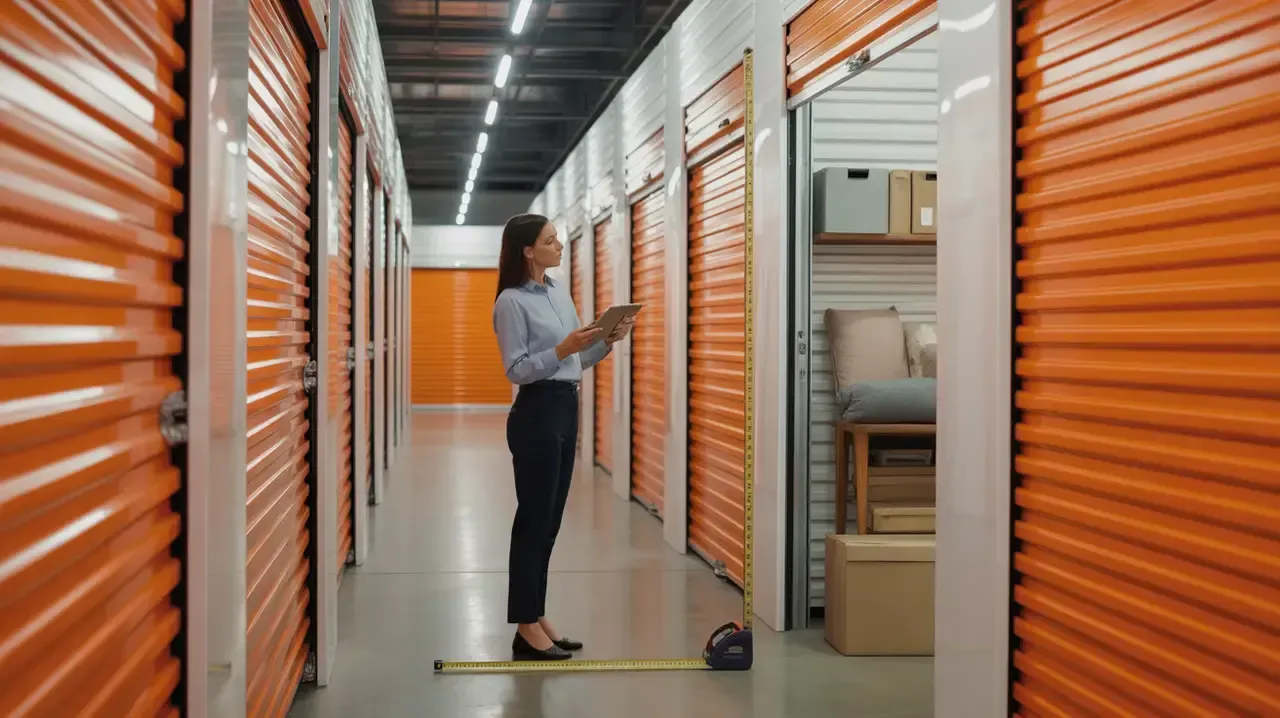
A 5x10 storage unit fits a one-bedroom apartment, a 10x10 holds a two-bedroom home, and a 10x20 accommodates a three to four-bedroom house. Calculate your exact needs by measuring furniture dimensions, counting boxes, and adding 15 to 20 percent buffer space for walkways and stacking.
| Key Points: | |
|---|---|
| • | Storage units are measured in square feet (length x width), with standard heights of 8 to 10 feet |
| • | A queen bed requires approximately 40 cubic feet; a dresser needs 30 cubic feet; a sofa takes 50 to 70 cubic feet |
| • | 5x10 units (50 sq ft) cost $140 to $275 per month; 10x20 units (200 sq ft) run $190 to $560 per month |
| • | Climate-controlled units protect furniture, electronics, and documents from temperature damage in areas with extreme weather |
| • | Disassembling furniture reduces space needs by 25 to 40 percent compared to storing items fully assembled |
How Storage Unit Sizes Are Measured
Storage facilities measure units by floor dimensions in feet, expressed as width by depth. A 5x10 unit provides 50 square feet of floor space, while a 10x20 offers 200 square feet. Standard ceiling heights range from 8 to 10 feet, giving you vertical stacking room that multiplies your usable space.
Square footage tells you floor area, but cubic footage determines total capacity. A 5x10 unit with 8-foot ceilings provides 400 cubic feet of storage volume. Understanding both measurements helps you maximize vertical space with proper stacking and shelving.
Common Storage Unit Dimensions
| Unit Size | Square Feet | Cubic Feet (8 ft ceiling) | Comparable Space |
|---|---|---|---|
| 5x5 | 25 sq ft | 200 cu ft | Large closet |
| 5x10 | 50 sq ft | 400 cu ft | Walk-in closet |
| 10x10 | 100 sq ft | 800 cu ft | Half of one-car garage |
| 10x15 | 150 sq ft | 1,200 cu ft | Large bedroom |
| 10x20 | 200 sq ft | 1,600 cu ft | One-car garage |
| 10x30 | 300 sq ft | 2,400 cu ft | Two-car garage |
Storage Unit Size Calculator: Step-by-Step Method
Calculating your storage needs requires measuring your items and converting those measurements to cubic feet. This systematic approach prevents both overpaying for unused space and cramming belongings into undersized units.
Step 1: Inventory Your Items
Create a detailed list of everything you plan to store. Group items by category: furniture, appliances, boxes, and seasonal items. Note which pieces can be disassembled and which must remain intact.
Step 2: Calculate Cubic Footage
Measure each large item's length, width, and height in feet. Multiply these three numbers to get cubic feet. For example, a dresser measuring 4 feet wide, 2 feet deep, and 4 feet tall equals 32 cubic feet (4 x 2 x 4 = 32).
Standard Furniture Cubic Footage Reference
| Item | Cubic Feet |
|---|---|
| King bed (disassembled) | 70 cu ft |
| Queen bed (disassembled) | 40 to 50 cu ft |
| Dresser | 30 cu ft |
| Sofa (3-seat) | 50 to 70 cu ft |
| Dining table | 35 cu ft |
| Dining chair | 10 cu ft |
| Refrigerator | 50 to 60 cu ft |
| Washer or dryer | 20 cu ft each |
| Medium moving box | 3 cu ft |
| Large moving box | 5 cu ft |
| Wardrobe box | 10 cu ft |
Step 3: Add Buffer Space
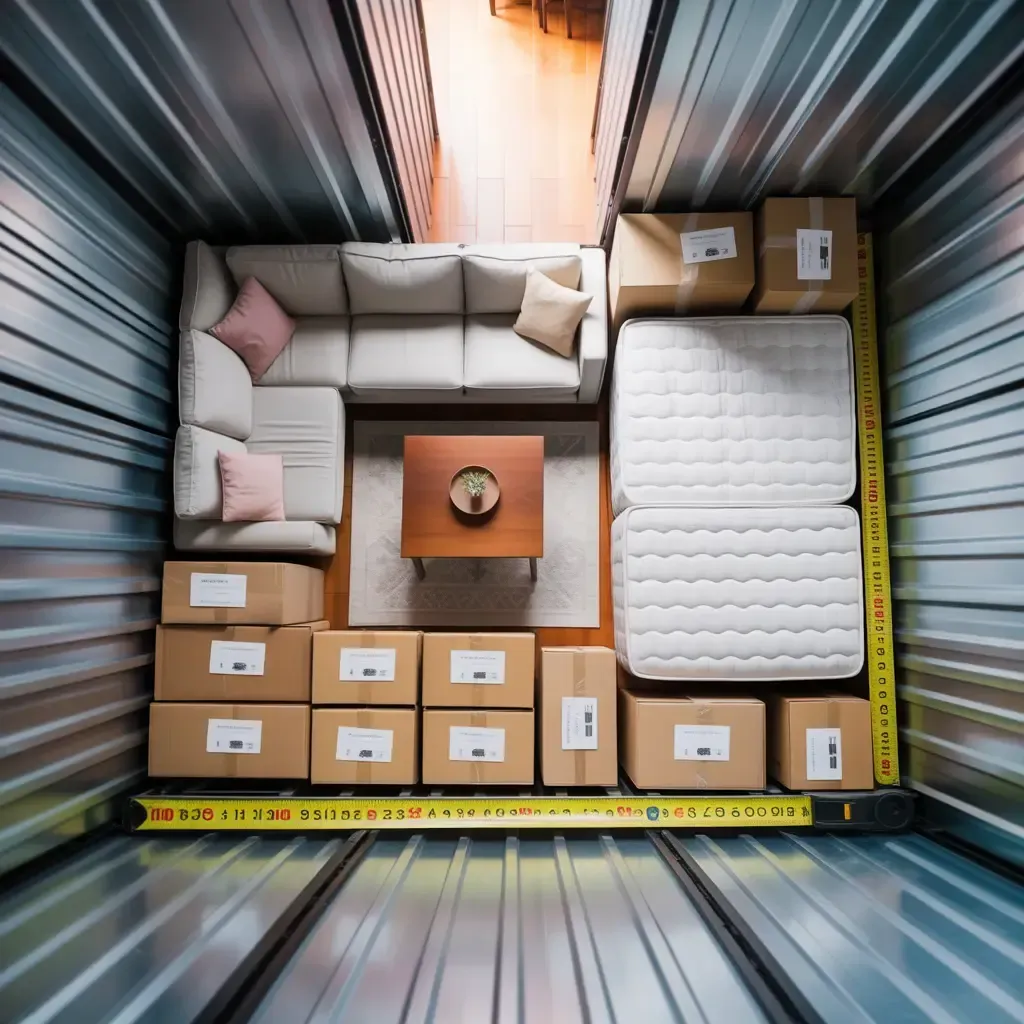
Add 15 to 20 percent to your total cubic footage for walkways between items and air circulation. If you need frequent access to specific items, increase the buffer to 25 percent. This prevents the frustration of unpacking everything to reach items stored in the back.
Step 4: Match to Unit Size
Divide your total cubic footage (including buffer) by the unit's ceiling height to find required floor space. For 350 cubic feet of items with an 8-foot ceiling, you need approximately 44 square feet, making a 5x10 unit (50 sq ft) the right choice.
Storage Unit Size Guide by Home Type
Your current living space provides a reliable baseline for storage needs. These recommendations assume you are storing most household contents, not just a few items. Adjust based on your actual inventory.
Studio Apartment (Under 500 sq ft)
Recommended unit: 5x5 to 5x10
A 5x5 unit handles seasonal items, boxes, and small furniture pieces. Choose a 5x10 if storing a bed, small sofa, or multiple large items. Studios typically generate 150 to 300 cubic feet of storable items.
One-Bedroom Apartment (500 to 800 sq ft)
Recommended unit: 5x10 to 10x10
A 5x10 fits a queen bed, dresser, nightstands, and 15 to 20 boxes. Upgrade to 10x10 if you have a full living room set or cannot disassemble furniture. One-bedroom apartments typically need 300 to 500 cubic feet of storage. Our storage unit size guide provides visual comparisons for these common scenarios.
Two-Bedroom Home (800 to 1,200 sq ft)
Recommended unit: 10x10 to 10x15
A 10x10 accommodates two bedroom sets, a living room, and 25 to 30 boxes. Choose 10x15 for additional furniture, appliances, or items that cannot stack. Two-bedroom homes generate 500 to 800 cubic feet of storage needs.
Three-Bedroom Home (1,200 to 2,000 sq ft)
Recommended unit: 10x15 to 10x20
A 10x15 handles three bedroom sets and common areas. Select 10x20 for garage items, outdoor furniture, or large appliances. Three-bedroom homes require 800 to 1,200 cubic feet of storage space.
Four-Bedroom Home or Larger (2,000+ sq ft)
Recommended unit: 10x20 to 10x30
A 10x20 fits most four-bedroom home contents when items are properly organized. Choose 10x30 for extensive collections, workshop equipment, or vehicle storage. Large homes need 1,200 to 2,000+ cubic feet.
What Fits in Each Storage Unit Size
Visualizing unit capacity helps you make confident decisions. These examples assume efficient packing with disassembled furniture and stacked boxes.
5x5 Unit (25 sq ft): Large Closet
- 20 to 25 medium boxes
- Seasonal decorations
- Sports equipment (skis, bikes, golf clubs)
- Small furniture pieces
- Seasonal clothing and bedding
Best for: College students, seasonal item storage, business document archives, and small decluttering projects.
5x10 Unit (50 sq ft): Walk-in Closet
- Queen or full mattress set
- Dresser and nightstands
- Small sofa or loveseat
- TV and entertainment items
- 30 to 40 boxes
Best for: One-bedroom apartment contents, staging during home sales, and extended travel storage.
10x10 Unit (100 sq ft): Half Garage
- Two complete bedroom sets
- Living room furniture
- Dining table and chairs
- Multiple appliances
- 50 to 60 boxes
Best for: Two-bedroom apartment or small home contents, business inventory, and renovation storage.
10x15 Unit (150 sq ft): Large Bedroom
- Three bedroom sets
- Full living and dining room
- Washer and dryer
- Outdoor furniture
- 70 to 80 boxes
Best for: Three-bedroom home contents, small business storage, and estate settlement.
10x20 Unit (200 sq ft): One-Car Garage
- Four-bedroom home contents
- Multiple appliances
- Garage and workshop items
- Recreational equipment
- 100+ boxes
- One vehicle (compact to midsize)
Best for: Whole-house storage, vehicle storage, contractor equipment, and retail inventory.
10x30 Unit (300 sq ft): Two-Car Garage
- Five+ bedroom home contents
- Multiple vehicles
- Boats up to 20 feet
- RVs and trailers
- Large equipment and machinery
Best for: Large home contents, vehicle collections, business equipment, and commercial inventory.
Factors That Affect Your Storage Unit Size
Several variables influence the right unit size beyond simple square footage calculations. Consider these factors before finalizing your decision.
Furniture Disassembly
Disassembling beds, tables, and shelving reduces space requirements by 25 to 40 percent. A king bed frame takes 70 cubic feet assembled but only 40 to 50 cubic feet when broken down. Keep hardware in labeled bags taped to furniture pieces.
Access Frequency
Frequent access requires wider aisles and strategic item placement. If you visit monthly or more often, add 20 to 25 percent buffer space. For long-term storage with rare access, you can pack more densely with 10 to 15 percent buffer.
Item Shape and Stackability
Uniform boxes stack efficiently, maximizing vertical space. Irregular items like bicycles, sports equipment, and oddly shaped furniture create gaps that waste space. Group similar items and use shelving units to organize non-stackable pieces.
Climate Sensitivity
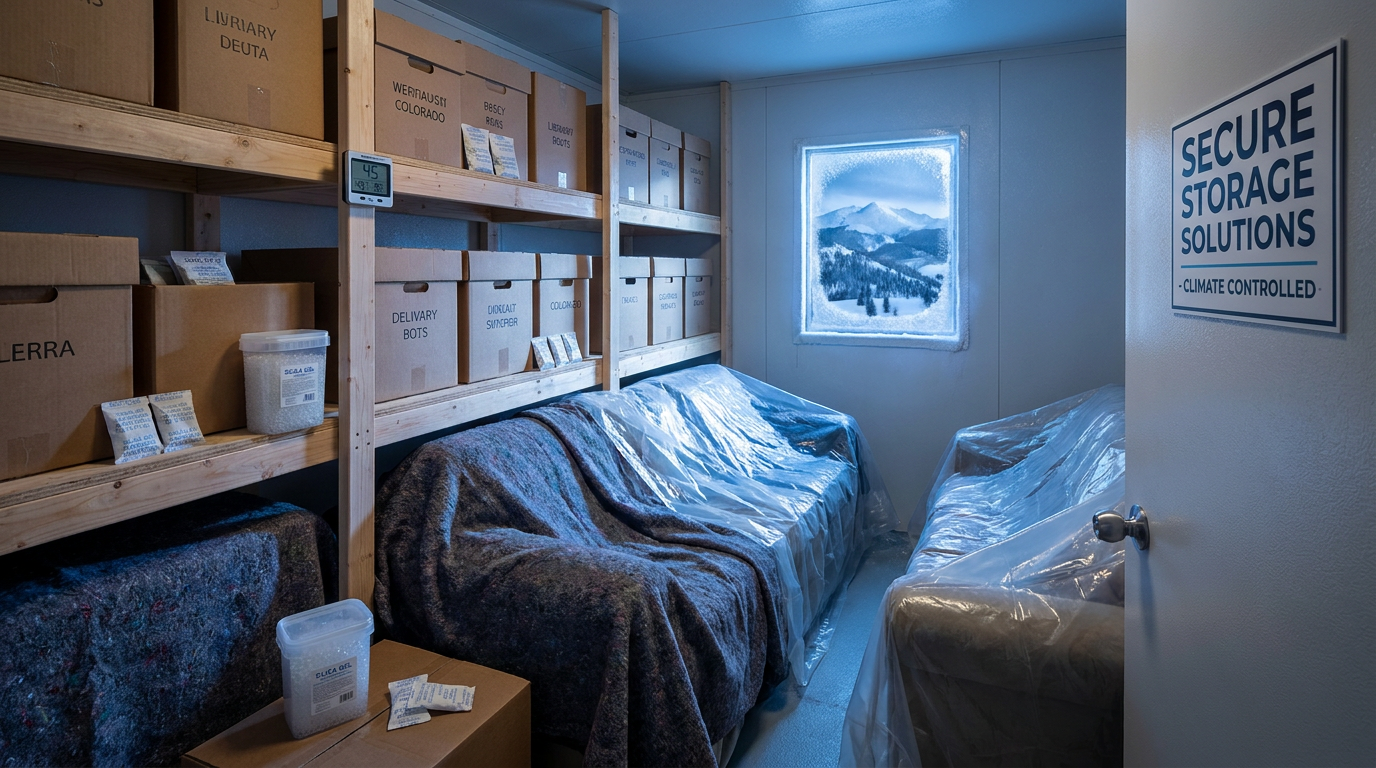
Climate-controlled units maintain temperatures between 55 and 80 degrees Fahrenheit year-round. These units protect wood furniture from warping, electronics from moisture damage, and documents from deterioration. In mountain climates like Colorado's Gunnison Valley, where temperatures swing from below zero to above 90 degrees seasonally, climate control prevents costly damage to sensitive belongings.
Storage Duration
Short-term storage (under 3 months) allows tighter packing since you will retrieve items soon. Long-term storage (6+ months) benefits from extra space for air circulation and easier inventory checks. Consider how your needs might change over the storage period.
Vehicle and Specialty Storage Sizing
Vehicles, boats, and RVs require specific unit dimensions that differ from household storage calculations.
Car Storage
Compact cars (Honda Civic, Toyota Corolla) fit in 10x15 units with minimal clearance. Midsize sedans and small SUVs need 10x20 units. Full-size trucks and large SUVs require 10x25 or larger. Add 2 to 3 feet on each side for door opening and access.
Motorcycle Storage
A single motorcycle fits in a 5x10 unit with room for gear and accessories. Multiple motorcycles or bikes with trailers need 10x10 or larger units.
Boat Storage
Measure your boat's length including trailer tongue. Add 3 to 4 feet for access. A 16-foot boat with trailer typically needs a 10x20 unit. Larger boats require 10x30 units or open parking spaces. For boat and RV parking, facilities like Elk Mountain Storage offer dedicated outdoor spaces sized for larger vehicles.
RV and Trailer Storage
Travel trailers range from 15 to 35 feet, requiring 10x20 to 10x40 units or open parking. Class A motorhomes often exceed 30 feet and need specialized parking areas with 12 to 15 feet of width clearance.
Money-Saving Storage Sizing Tips
Research shows 30 to 50 percent of storage renters pay for unused space. These strategies help you avoid overspending while ensuring adequate room for your belongings.
Purge Before Packing
Sort items into keep, donate, and discard categories before calculating storage needs. Eliminating items you no longer need can reduce required space by 20 to 30 percent, potentially dropping you to a smaller, cheaper unit size.
Maximize Vertical Space
Stack boxes to ceiling height using heavier items on bottom. Use freestanding shelving units to organize smaller items and create stable stacking surfaces. Vertical efficiency can reduce floor space needs by 30 to 40 percent.
Choose Strategic Timing
Storage demand peaks during summer moving season (May through August), often increasing prices by 10 to 20 percent. Winter months typically offer better rates and promotional pricing. Many facilities offer move-in specials like the first month free or percentage discounts.
Consider Unit Location Within Facility
Ground-floor and drive-up units cost more than upper-floor or interior units. If you are storing lightweight items you can carry upstairs, interior units offer savings of $20 to $50 per month. Drive-up access matters most for heavy furniture and frequent access needs.
Frequently Asked Questions
What can fit in a 5x10 storage unit?
A 5x10 storage unit holds the contents of a one-bedroom apartment: a queen bed set, dresser, small sofa, TV, and 30 to 40 boxes. This equals approximately 400 cubic feet of storage space when using the full 8-foot ceiling height. The unit measures 50 square feet, comparable to a large walk-in closet.
How big of a storage unit do I need for a 2-bedroom apartment?
A two-bedroom apartment typically requires a 10x10 storage unit (100 square feet). This size accommodates two complete bedroom sets, living room furniture, a dining set, and 50 to 60 boxes. If you have large appliances or cannot disassemble furniture, upgrade to a 10x15 unit for comfortable access and organization.
Are storage units measured in square or cubic feet?
Storage facilities advertise units in square feet (floor dimensions), but cubic feet determines actual capacity. A 5x10 unit provides 50 square feet of floor space and 400 to 500 cubic feet of total volume depending on ceiling height. Calculate your items in cubic feet, then match to available unit square footage.
Do I need climate-controlled storage for furniture?
Climate control is recommended for wood furniture, leather items, electronics, documents, and antiques stored longer than three months. Temperature fluctuations cause wood to warp, leather to crack, and electronics to corrode. In areas with temperature extremes (below 32 degrees or above 90 degrees Fahrenheit), climate control prevents costly damage. Learn more about protecting your belongings with our storage protection plans.
How much does a 10x10 storage unit cost on average?
A 10x10 storage unit costs $100 to $200 per month nationally, varying by location, features, and demand. Climate-controlled units add $25 to $75 monthly. Urban areas and peak seasons command higher prices. Mountain resort communities may have seasonal rate variations based on tourism patterns.
What size storage unit do I need for a car?
Compact and midsize cars fit in 10x20 units (200 square feet), providing door-opening clearance on both sides. Full-size trucks, SUVs, and luxury vehicles need 10x25 or 10x30 units. Measure your vehicle's length and width, then add 4 to 6 feet total for comfortable access and maneuvering.
Can I store a sofa in a 5x5 unit?
Most sofas will not fit in a 5x5 unit. A standard three-seat sofa measures 7 to 8 feet long, exceeding the 5-foot width of the unit. Loveseats (5 to 6 feet) might fit standing on end but leave little room for other items. Choose a 5x10 or larger unit for sofa storage.
Choosing the Right Storage Unit at Elk Mountain Storage
Selecting the correct storage unit size saves money and frustration. Use the calculation method outlined above, reference the size charts, and add appropriate buffer space for your access needs. For Gunnison Valley residents storing seasonal gear, recreational equipment, or household items during transitions, locally owned facilities offer personalized guidance that national chains cannot match.
Consider your specific situation: Are you storing during a home renovation for three months or relocating items long-term? Do you need weekly access to ski equipment or annual access to holiday decorations? These factors determine whether a compact 5x10 or spacious 10x20 better serves your needs.
When in doubt, visiting a facility in person helps visualize unit sizes. Walk into different units, imagine your items inside, and ask staff about their recommendations based on experience with similar storage projects. The right size unit keeps your belongings organized, accessible, and protected without paying for space you do not need.
|