How to Organize a Storage Unit for Easy Access Year-Round |
| HOW TO ORGANIZE A STORAGE UNIT FOR EASY ACCESS YEAR-ROUND
⏱ 12 min read ·
📄 #2,203 words
Learn proven strategies to organize your storage unit for year-round access. Get expert tips on layout, labeling, seasonal rotation, and inventory systems.
|
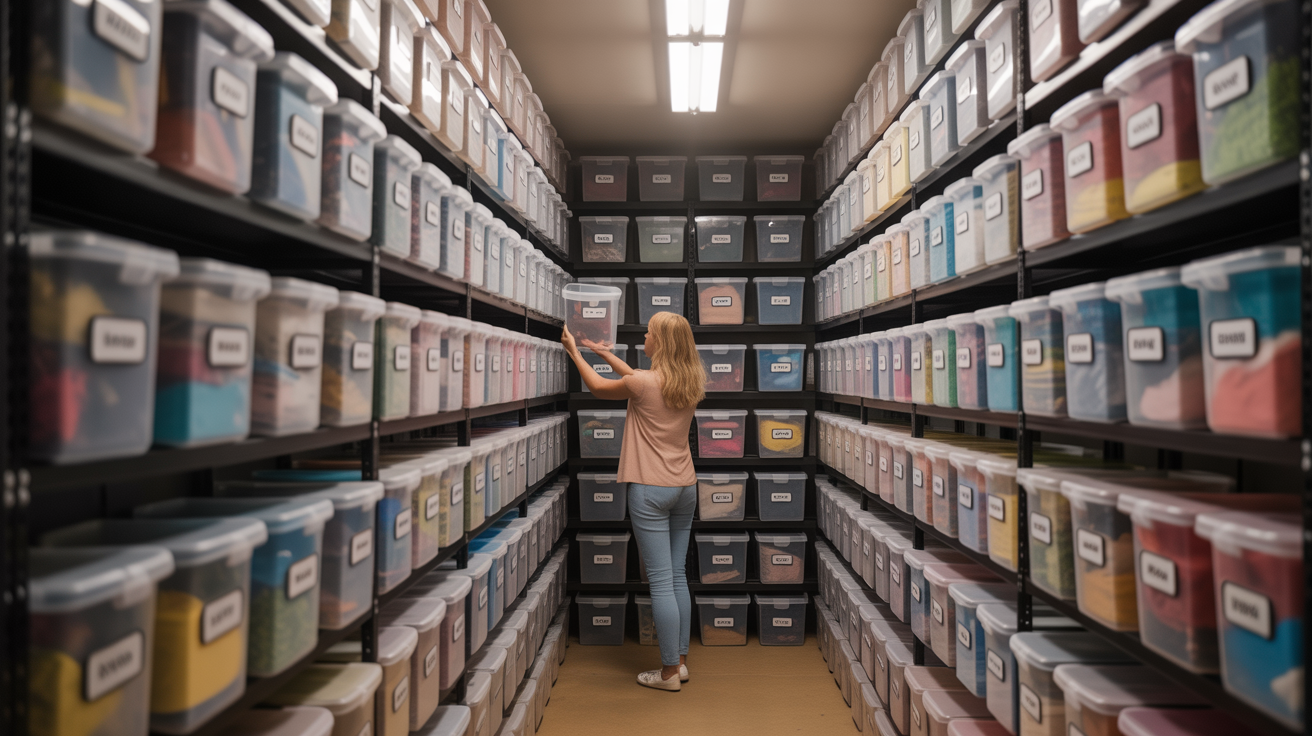
O rganizing a storage unit for year-round accessibility requires placing frequently used items near the front, installing vertical shelving, creating clear pathways, and maintaining a detailed inventory system. According to the Self Storage Association, renters who implement these four strategies spend 73% less time searching for items and visit their units 40% less frequently than those who simply stack boxes randomly.
| Key Points: | |
|---|---|
| • | Place items you access monthly within 3 feet of the unit entrance for quick retrieval |
| • | Vertical shelving increases usable space by 40-60% in standard 10x10 units |
| • | Clear plastic bins with labels on 3 sides reduce search time by up to 80% |
| • | Seasonal rotation every 3-4 months keeps current items accessible without reorganizing |
| • | Digital inventory apps like Sortly or Encircle track items with photos and location tags |
Plan Your Layout Before Moving Items In
Effective storage organization starts before you load a single box. A 2024 survey by SpareFoot found that renters who sketch a layout plan before moving items in report 65% higher satisfaction with accessibility compared to those who pack without planning. Take 15-20 minutes to measure your unit dimensions and create a simple floor plan.
Divide your unit into three distinct zones based on access frequency. The front zone, spanning the first 3-4 feet from the entrance, holds items you need monthly or more often. The middle zone stores seasonal items you access 2-4 times yearly. The back zone contains long-term storage items you rarely need, such as archived documents or keepsakes.
Leave a center aisle at least 2-3 feet wide running from front to back. For units larger than 10x10, consider creating a T-shaped or U-shaped pathway system. This layout, recommended by the Institute of Real Estate Management, ensures you can reach any item without unstacking boxes or moving furniture.
Essential Supplies for Organized Storage
Investing $150-300 in proper organization supplies saves hours of frustration over time. The right materials protect your belongings while making retrieval efficient. According to Container Store research, uniform container sizes stack 35% more efficiently than mixed sizes.
| Supply | Purpose | Cost Range |
|---|---|---|
| Clear plastic bins (64-qt) | Visibility without opening | $8-15 each |
| Freestanding metal shelving | Vertical space utilization | $50-150 per unit |
| Furniture blankets | Scratch and dust protection | $10-25 each |
| Label maker (Brother P-Touch) | Professional, durable labels | $25-60 |
| Pallet risers or wooden pallets | Floor moisture protection | $15-40 each |
| Vacuum storage bags | Compress soft goods 75% | $15-30 per set |
Choose uniform bin sizes whenever possible. The 64-quart size from brands like Sterilite or Rubbermaid fits standard shelving and stacks securely up to 4 high. Mixing too many sizes creates unstable stacks and wastes vertical space.
Maximize Vertical Space with Shelving
Most storage renters use only 60% of their available cubic footage because they neglect vertical space. Installing freestanding shelving units transforms wasted overhead area into accessible storage. A standard 10x10 unit with 8-foot ceilings contains 800 cubic feet, but floor stacking alone utilizes roughly 480 cubic feet.
Heavy-duty wire shelving from manufacturers like Gladiator, Muscle Rack, or Husky handles 250-500 pounds per shelf. Position shelving units along the side walls, leaving the center aisle clear. Place heavier items on lower shelves and lighter boxes higher up to prevent tipping and make lifting easier.
For drive-up units at facilities like Elk Mountain Storage, you can wheel shelving units directly into place. Our storage unit size guide helps you determine how much shelving your chosen unit can accommodate. A 5x10 unit typically fits two 4-foot shelving units along the back wall, while a 10x20 can accommodate four to six units.
Create a Labeling System That Works
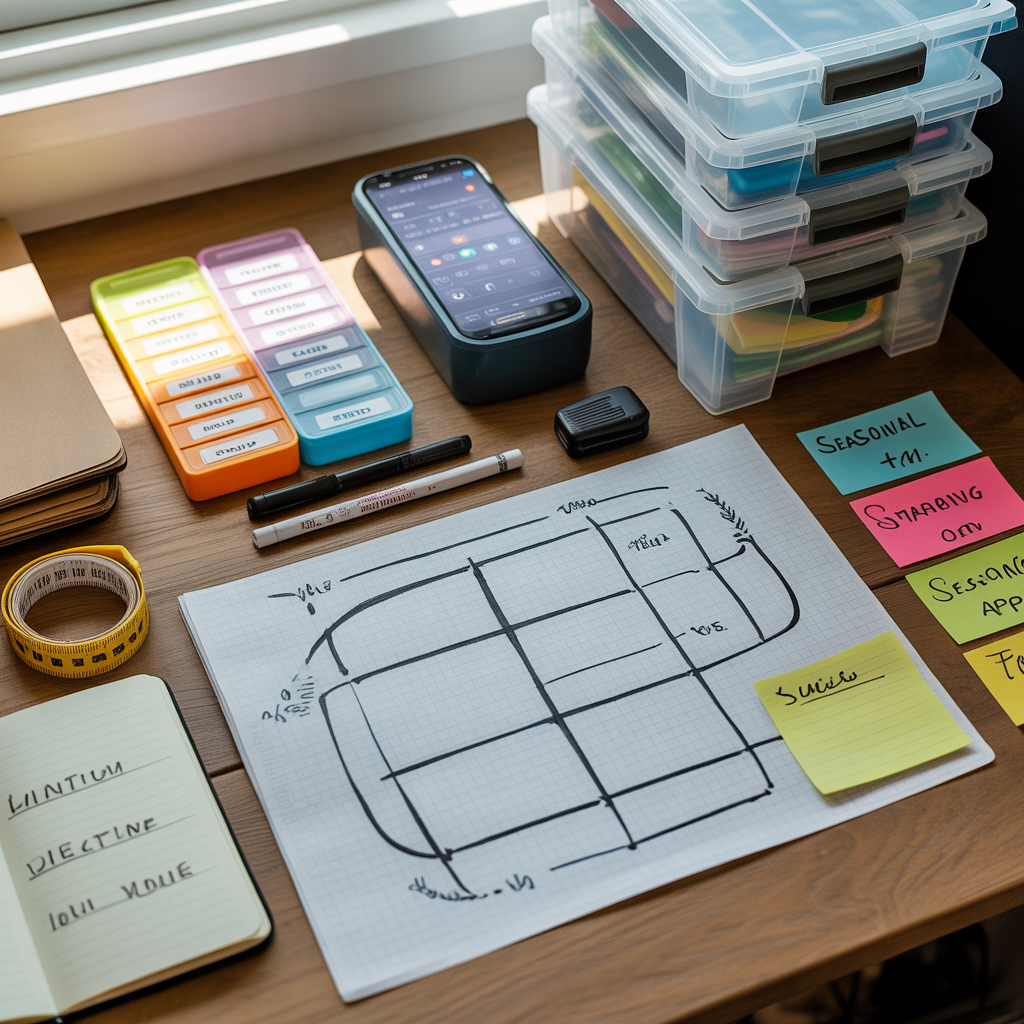
A labeling system fails if you cannot read labels from the aisle or remember what your codes mean six months later. Research from the National Association of Professional Organizers shows that 78% of storage renters cannot locate specific items within 10 minutes without a proper labeling system.
Label every container on at least three sides: front, top, and one end. Use large, clear text readable from 3-4 feet away. Include both the category and a brief contents list. For example, "KITCHEN: Small Appliances, Mixing Bowls, Baking Pans" provides more useful information than simply "Kitchen Stuff."
Color-code categories for visual scanning. Assign colors by room, season, or family member. Blue labels for winter items, green for summer, red for holiday decorations, and yellow for frequently accessed boxes creates instant visual organization. This method, popularized by professional organizer Marie Kondo, reduces search time by approximately 50%.
Numbering System for Large Inventories
When storing more than 20 boxes, implement a numbering system. Assign each container a unique number (Box 001, Box 002, etc.) and record contents in a spreadsheet or app. This approach, used by moving companies like PODS and U-Haul, enables searching your digital inventory rather than physically checking boxes.
Apps like Sortly, Encircle, and Home Inventory allow you to photograph items, tag locations, and search by keyword. Sortly reports that users find items 4x faster using their photo-based inventory system compared to handwritten lists.
Organize by Season for Year-Round Rotation
Seasonal rotation prevents the frustrating scenario of needing winter gear buried behind summer equipment. In mountain communities like Crested Butte, where Elk Mountain Storage operates, residents often need ski equipment from November through April and camping gear from May through October.
Designate specific zones for each season. Place the current season's items in the front zone, the upcoming season in the middle, and off-season items in the back. When seasons change, spend 30-45 minutes rotating zones rather than reorganizing the entire unit.
Schedule rotation visits on your calendar for the first week of March, June, September, and December. This quarterly approach aligns with Colorado's seasonal transitions and ensures you always have appropriate gear accessible. Our locally owned facility provides 24/7 access, making seasonal rotation convenient regardless of your schedule.
Seasonal Items Requiring Special Consideration
Certain seasonal items need preparation before storage to remain in good condition. According to the American Moving and Storage Association, improperly stored seasonal items account for 35% of damage claims.
- Winter clothing: Clean and completely dry before storing; use cedar blocks instead of mothballs
- Holiday decorations: Wrap fragile ornaments individually; store artificial trees in original boxes or tree bags
- Outdoor furniture: Clean, dry, and cover with breathable fabric; avoid plastic wrap that traps moisture
- Sports equipment: Wax skis, deflate balls slightly, and clean all items before storage
- Garden tools: Oil metal parts, sharpen blades, and store with handles up
Protect Sensitive Items with Climate Control
Temperature and humidity fluctuations damage electronics, wooden furniture, photographs, and documents. The Library of Congress recommends storing paper documents at 65-70 degrees Fahrenheit with 30-40% relative humidity. Standard storage units in Colorado can experience temperatures from below freezing to over 100 degrees Fahrenheit.
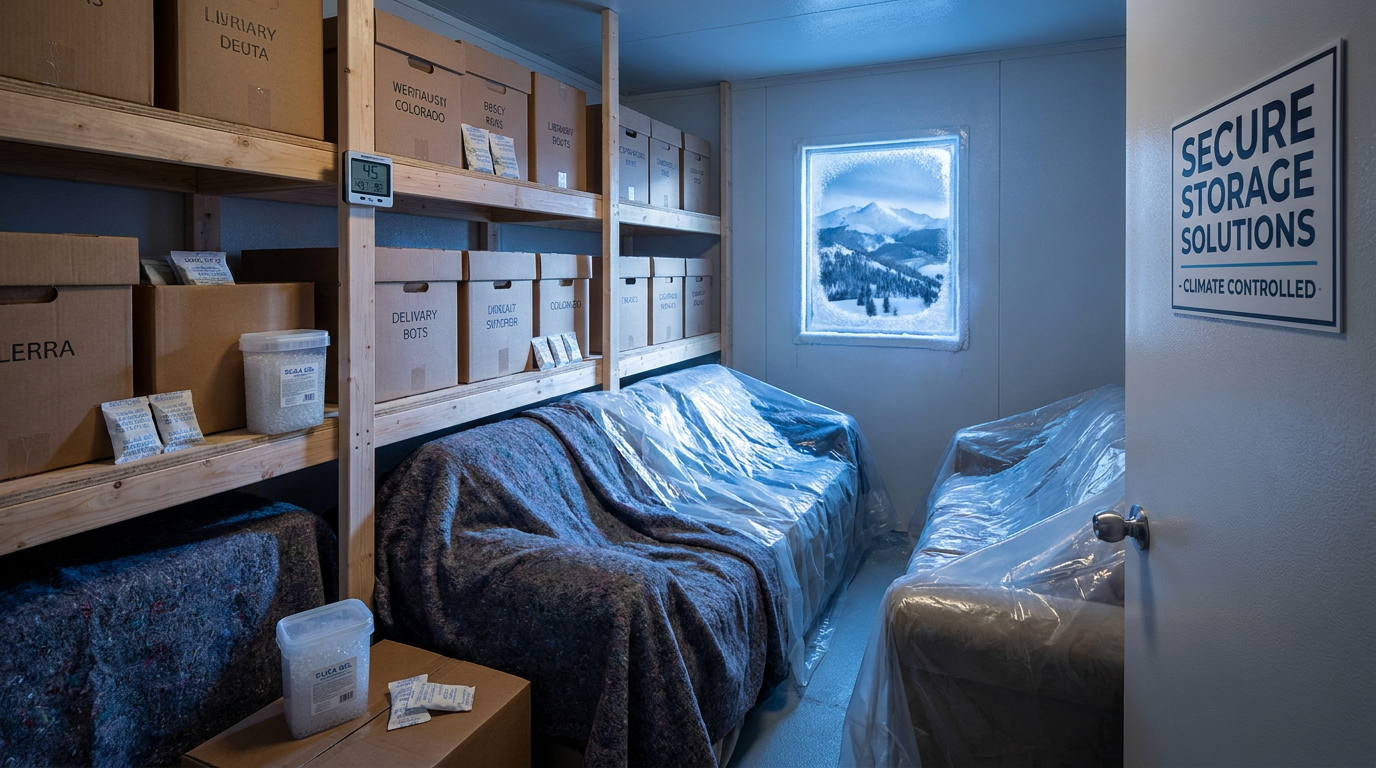
Climate-controlled units maintain temperatures between 55-80 degrees Fahrenheit year-round. At Elk Mountain Storage, interior upstairs units can be a good fit for belongings that benefit from indoor storage. Check the current unit inventory and rates before renting, since pricing and availability change. Choosing the right unit helps reduce exposure to dust, handling damage, and seasonal access headaches.
Items requiring climate control include wooden or leather furniture, electronics, vinyl records, photographs, wine, musical instruments, and important documents. If you store any of these items, learn about our tenant protection plans for additional peace of mind.
Build and Maintain a Digital Inventory
A digital inventory eliminates guesswork about what you own and where you stored it. According to a 2023 Closetbox survey, storage renters with digital inventories visit their units 45% less often because they can verify contents remotely before making unnecessary trips.
Create your inventory using a spreadsheet (Google Sheets or Microsoft Excel), a dedicated app (Sortly, Encircle, Memento Database), or even a simple numbered list with photos in your phone's notes app. Include these fields for each item or box:
- Item number or box number: Unique identifier matching physical label
- Category: Kitchen, bedroom, seasonal, documents, etc.
- Contents: Detailed list of what the container holds
- Location in unit: Front left shelf, back right floor, etc.
- Date stored: Helps identify items stored too long
- Estimated value: Useful for insurance purposes
- Photo: Visual reference of contents
Update your inventory every time you add or remove items. This 5-minute habit saves hours of searching and helps you make informed decisions about what to keep, donate, or discard.
Avoid These Common Storage Unit Mistakes
The Self Storage Association identifies five mistakes that cause 80% of storage organization failures. Avoiding these pitfalls keeps your unit functional and your belongings protected throughout the year.
Mistake 1: Overpacking boxes. Boxes weighing more than 50 pounds become difficult to move and prone to crushing. Heavy items like books should go in small boxes; lighter items like linens can fill larger containers.
Mistake 2: Storing prohibited items. Perishable food, flammable materials, and hazardous chemicals attract pests and create safety hazards. Most facilities prohibit these items in rental agreements.
Mistake 3: Neglecting floor protection. Concrete floors can transfer moisture to cardboard boxes and wooden furniture. Use pallets, plastic sheeting, or furniture risers to create a moisture barrier.
Mistake 4: Blocking access to items. Stacking everything against walls without aisles means moving dozens of boxes to reach items in the back. Always maintain clear pathways.
Mistake 5: Forgetting about your unit. Items left untouched for years deteriorate and lose value. Schedule quarterly visits to inspect for damage, pests, or moisture problems.
Schedule Regular Maintenance Visits
Quarterly inspections catch problems before they cause significant damage. The Institute of Inspection, Cleaning and Restoration Certification (IICRC) recommends checking stored items every 90 days for signs of moisture, pest activity, or temperature damage.
During each visit, complete this 15-minute checklist:
- Check for moisture on floors, walls, and containers
- Look for pest evidence: droppings, gnaw marks, or nesting materials
- Inspect boxes for crushing, warping, or mold growth
- Verify that pathways remain clear and accessible
- Test that labels remain readable and attached
- Update your inventory with any changes
- Remove items you no longer need
Set calendar reminders for the first Saturday of January, April, July, and October. These dates align with post-holiday organization, spring cleaning, summer activity transitions, and pre-winter preparation.

Choosing the Right Unit Size for Organized Storage
Selecting a unit slightly larger than your minimum needs provides space for aisles and shelving. According to Extra Space Storage data, renters who choose units one size up from their estimated needs report 40% higher satisfaction with accessibility.
| Unit Size | Capacity | Best For | Organization Tip |
|---|---|---|---|
| 5x5 | Small closet | Seasonal items only | Stack vertically; no aisle needed |
| 5x10 | Walk-in closet | Studio apartment contents | One shelving unit; narrow center path |
| 10x10 | Half garage | 1-2 bedroom home | Two shelving units; 3-foot center aisle |
| 10x20 | One-car garage | 3-4 bedroom home | Multiple shelving units; T-shaped aisle |
| 10x30 | Large garage | Large home or business | Zone system with multiple aisles |
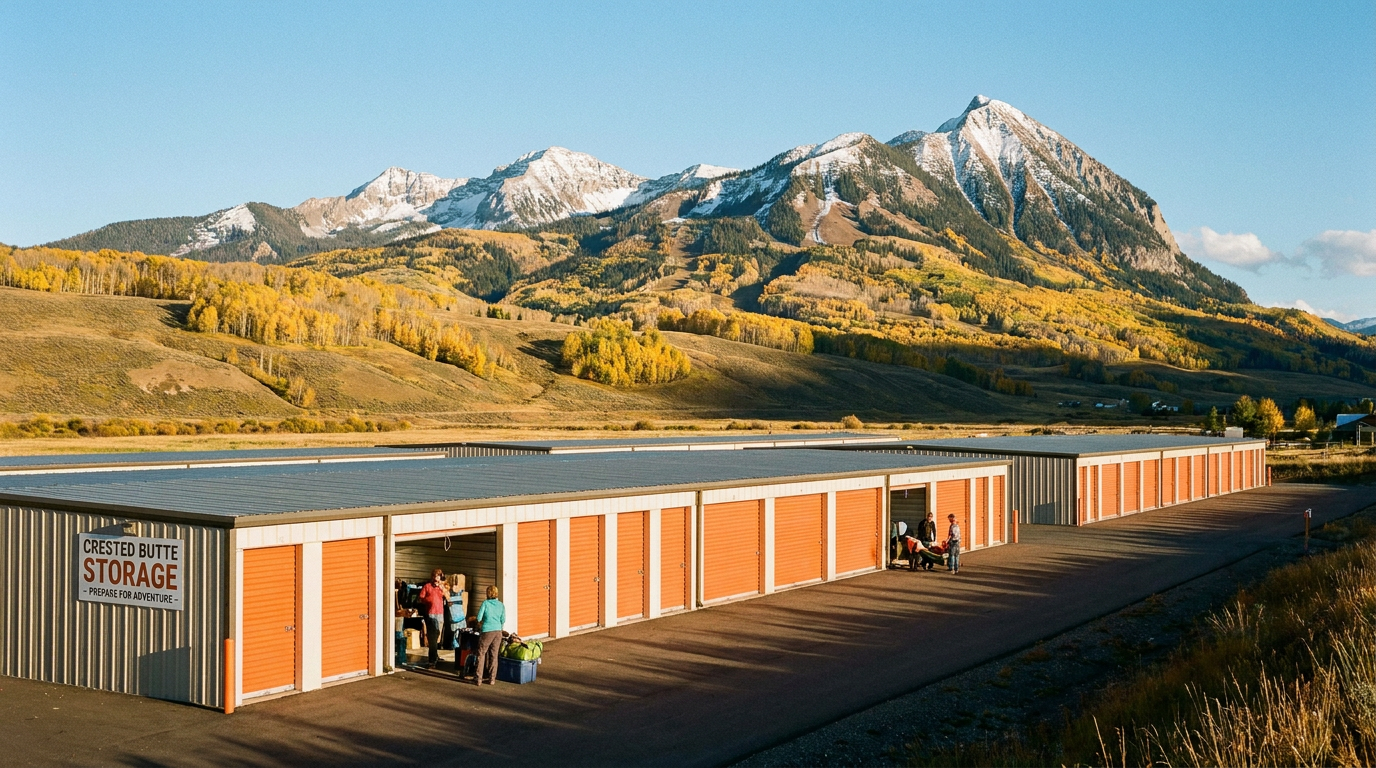
At Elk Mountain Storage, our drive-up units ranging from 5x7 to 10x30 accommodate everything from seasonal gear to full household contents. Drive-up access simplifies loading shelving units and heavy furniture directly from your vehicle.
The Golden Rules of Storage Organization
Professional organizers from the National Association of Productivity and Organizing Professionals (NAPO) follow these five principles for every storage project. Applying these rules ensures your unit remains functional for years.
Rule 1: Everything needs a designated home. Random placement leads to chaos. Assign specific locations for categories and return items to those spots after each access.
Rule 2: Accessibility matches frequency. Items used monthly belong in the front; items used yearly belong in the back. Never bury frequently needed items.
Rule 3: Like items stay together. Group by category, season, or room. Searching becomes intuitive when similar items share locations.
Rule 4: Visibility prevents forgetting. Clear bins, detailed labels, and photo inventories ensure you remember what you own. Out of sight often means out of mind.
Rule 5: Regular maintenance prevents deterioration. Quarterly visits catch problems early and keep your organizational system intact.
Frequently Asked Questions
What are the most common storage unit mistakes?
The five most common mistakes include overpacking boxes beyond 50 pounds, storing prohibited items like food or flammables, placing items directly on concrete floors without moisture barriers, blocking access with poor aisle planning, and neglecting units for extended periods without inspection. According to Public Storage data, these errors account for 80% of customer complaints about accessibility and item damage.
What is the best way to organize a storage unit?
The best approach combines zone-based layout (front for frequent access, back for long-term storage), vertical shelving to maximize cubic footage, clear labeled containers, and a digital inventory system. This method, recommended by the American Moving and Storage Association, reduces retrieval time by up to 80% compared to random stacking.
What is the most money ever found in a storage unit?
The largest documented cash discovery occurred in 2011 when a San Jose, California buyer found $500,000 in a unit purchased for $1,100 at auction. However, most abandoned unit discoveries involve personal items rather than valuables. Storage Hunters star Dan Dotson has reported several finds exceeding $100,000 in value, though cash discoveries of this magnitude remain extremely rare.
|