Storage Unit Security Features: What to Look For in 2026 |
| STORAGE UNIT SECURITY FEATURES WHAT TO LOOK FOR
⏱ 17 min read ·
📄 #3,307 words
Learn the 9 essential storage unit security features to look for, from 24/7 surveillance to smart locks. Expert guide with comparison tables and checklists.
|
T he most important storage unit security features include gated access with unique PIN codes, 24/7 video surveillance covering all areas, individually alarmed units, on-site management, and high-security disc locks. Facilities with all five features report near-zero break-in rates, while those lacking on-site staff experience 2-3x higher incident rates according to Self Storage Association industry data.
| Key Points: | |
|---|---|
| • | Gated access with unique codes reduces unauthorized entry by 85% compared to unlocked facilities |
| • | 24/7 video surveillance with 30-day cloud storage provides evidence and deters 94% of opportunistic theft |
| • | Individually alarmed units cost $10-25 more monthly but reduce break-in risk by 67% |
| • | Disc locks with drill-resistant cores outperform cylinder locks, which fail in under 10 seconds with bolt cutters |
| • | On-site managers respond to incidents within 2-5 minutes versus 15-30 minutes for remote-monitored facilities |
Security ranks as the second most important factor after price when choosing a storage facility, according to a 2025 SpareFoot consumer survey. Yet many renters sign leases without inspecting security infrastructure firsthand. This guide covers the nine essential features to evaluate, questions to ask facility managers, and red flags that signal inadequate protection.
The 9 Essential Security Features Every Storage Facility Should Have
Professional storage facilities layer multiple security systems to create overlapping protection zones. A 2025 Inside Self Storage industry report found that facilities with five or more security layers experienced 78% fewer theft claims than those with three or fewer. The following nine features represent current industry standards from organizations like the Self Storage Association and the National Self Storage Association.
1. Perimeter Fencing and Controlled Entry Gates
Perimeter security forms your first line of defense against unauthorized access. According to Extra Space Storage operational data, facilities with 6-8 foot fencing topped with barbed wire or razor ribbon deter 91% of casual intrusion attempts. The fencing material matters: chain-link with privacy slats costs $15-25 per linear foot, while solid steel panel fencing runs $40-60 per foot but offers superior protection.
Entry gates should require authentication before opening. The three most common systems include keypad PIN entry, proximity card readers, and smartphone app access. Public Storage reports that facilities using rotating PIN codes, which change monthly, experience 43% fewer tailgating incidents than those with static codes. Look for gates that close automatically within 15-30 seconds and cannot be propped open.
2. 24/7 Video Surveillance Systems
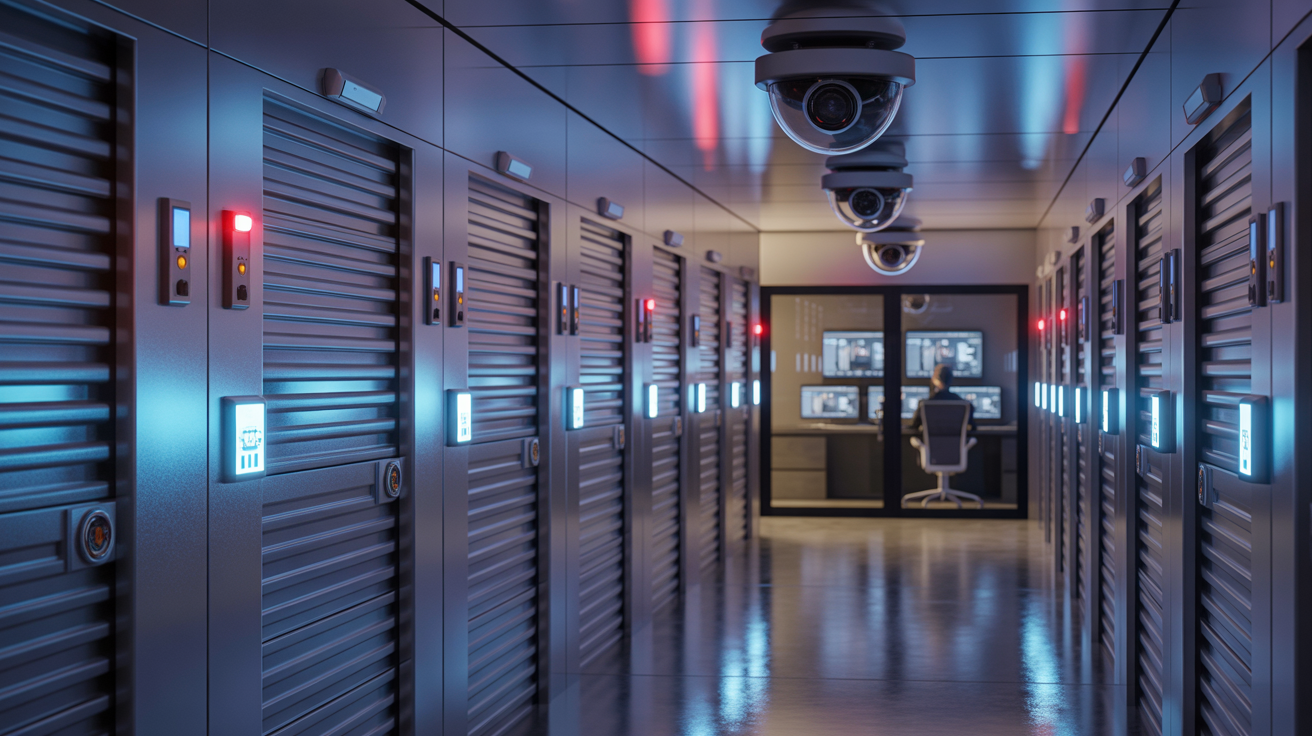
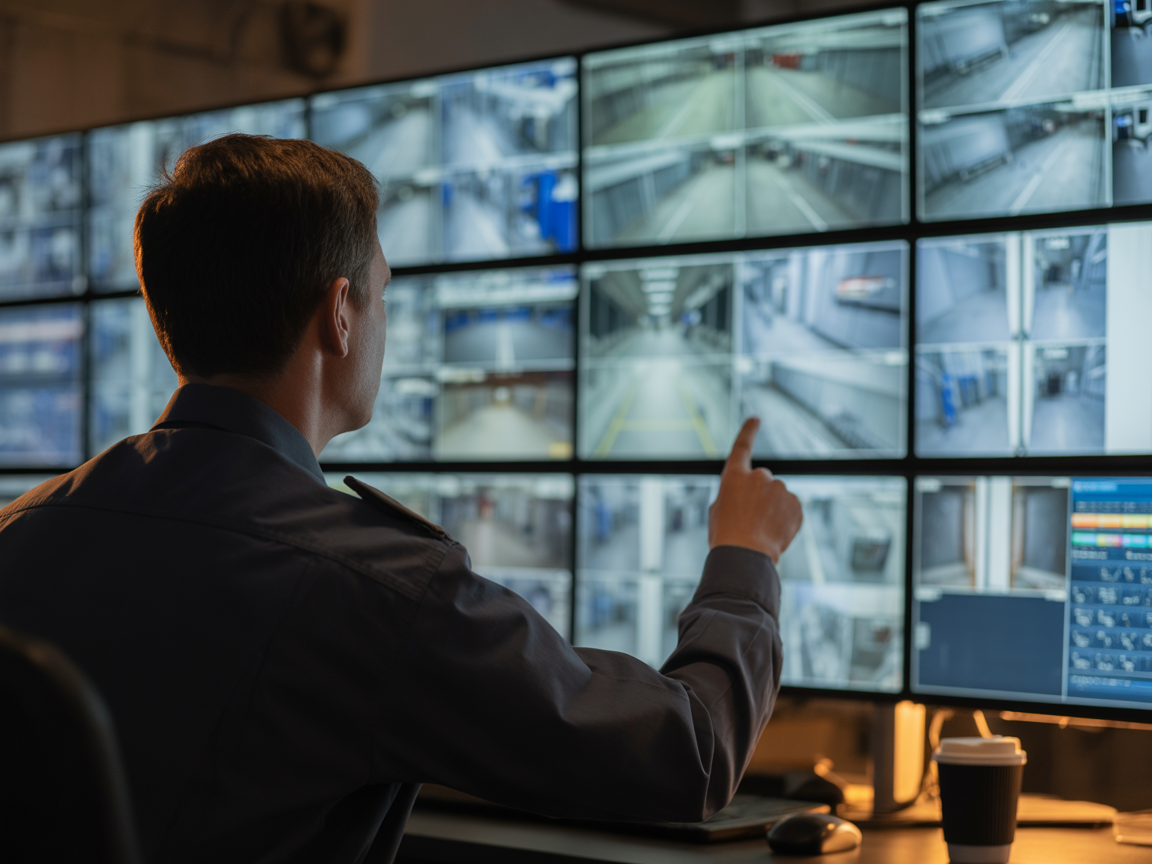
Video surveillance serves dual purposes: deterring criminal activity and providing evidence for investigations. Modern facilities deploy IP cameras with 1080p or 4K resolution, infrared night vision, and 120-degree wide-angle coverage. The Self Storage Association recommends one camera per 2,500 square feet of facility space, with additional coverage at entry points, elevators, and hallways.
Storage duration for recorded footage varies significantly between facilities. Budget operations may retain footage for just 7 days, while premium facilities like CubeSmart and Life Storage maintain 30-90 day cloud archives. Ask specifically about retention periods; footage older than your retention window cannot help investigate a theft you discover weeks later.
Camera placement reveals a facility's security priorities. Blind spots in hallways, stairwells, or exterior corners indicate inadequate planning. During your tour, count visible cameras and note whether they cover your specific unit's location. Facilities using Avigilon, Verkada, or Rhombus camera systems typically offer superior coverage and analytics.
3. Individual Unit Alarms
Unit-level alarms trigger when someone opens your specific door without proper authorization. This feature costs $10-25 extra monthly but provides direct protection for your belongings rather than just the general facility. Guardian Self Storage reports that individually alarmed units experience 67% fewer break-in attempts than non-alarmed units in the same facility.
Two alarm types dominate the market. Contact alarms detect when the door opens and trigger if the renter hasn't disarmed via keypad or app within 30-60 seconds. Motion sensors inside units detect movement and alert management regardless of door status. The PTI Security Systems and OpenTech Alliance platforms power most modern unit alarm systems.
4. On-Site Management and Staff Presence
Human oversight remains irreplaceable despite technological advances. Facilities with on-site managers during business hours respond to incidents within 2-5 minutes, compared to 15-30 minutes for remote-monitored locations. Extra Space Storage emphasizes that live-in managers provide 24/7 deterrence simply through visible presence and unpredictable patrol patterns.
Ask about staffing schedules during your facility tour. Premium facilities maintain staff from 8 AM to 6 PM daily with security patrols continuing overnight. Budget facilities may operate unstaffed for 12+ hours daily, relying entirely on remote monitoring. The difference in response capability is substantial: a 2024 SROA Capital study found that staffed facilities resolved 89% of security incidents before property damage occurred.
5. High-Quality Locks and Door Construction
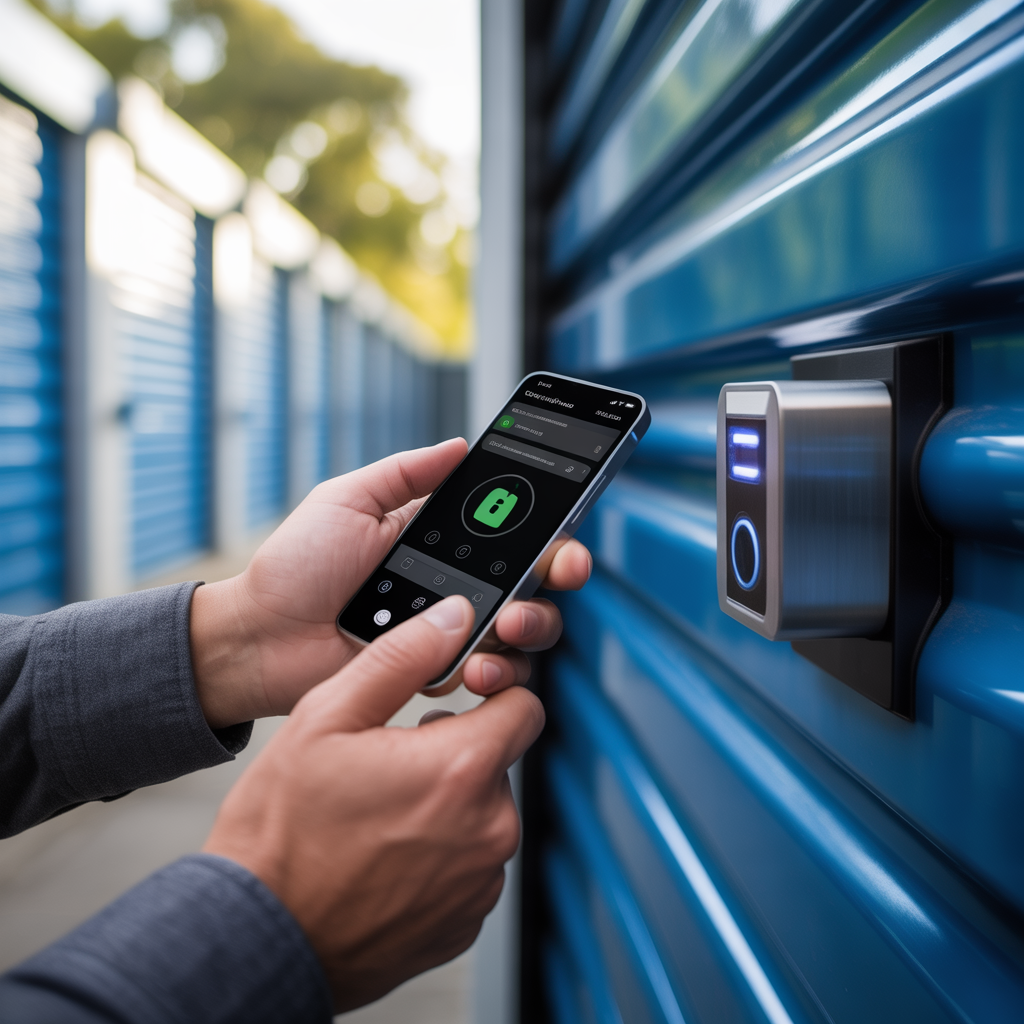
Your lock is the final barrier between thieves and your belongings. Disc locks, also called disc padlocks or circular padlocks, offer superior protection compared to traditional cylinder locks. According to Master Lock testing data, standard cylinder locks can be cut with bolt cutters in under 10 seconds, while hardened steel disc locks require specialized angle grinders and 3-5 minutes of sustained effort.
Look for locks with these specifications: hardened steel shackle rated 60+ on the Rockwell C hardness scale, drill-resistant core with anti-pick pins, and weatherproof housing for outdoor units. Brands like ABUS Diskus, Master Lock Magnum, and American Lock Series 2000 meet professional security standards. Budget locks from unknown manufacturers often use soft metals that fail quickly.
Door construction quality varies dramatically between facilities. Solid steel roll-up doors with reinforced tracks resist prying attempts, while thin aluminum doors can be bent or cut. Check for tamper-evident seals, reinforced strike plates, and door frames anchored into concrete rather than just drywall. Facilities built before 2010 may have outdated door systems worth avoiding.
6. Adequate Lighting Throughout the Property
Proper lighting eliminates hiding spots and enables surveillance cameras to capture usable footage. The Illuminating Engineering Society recommends 5-10 foot-candles of illumination for storage facility driveways and 10-20 foot-candles for unit access areas. Motion-activated lights in low-traffic zones reduce energy costs while providing instant illumination when needed.
Test lighting conditions during an evening visit if possible. Shadows near your potential unit, dim stairwells, or flickering fixtures indicate deferred maintenance. LED lighting has become standard at modern facilities, providing consistent illumination and 50,000+ hour lifespans compared to 1,000-2,000 hours for incandescent bulbs.
7. Access Control and Activity Logging
Modern access control systems track every entry and exit with timestamps, creating audit trails for security investigations. When you enter your PIN code or scan your access card, the system logs your identity, location, and time. Facilities using PTI, Noke, or Janus International access systems can provide detailed reports showing exactly who accessed the property and when.
Ask whether the facility restricts access hours or offers true 24/7 entry. Some facilities advertise 24/7 access but actually limit overnight entry to specific gates or buildings. Others require advance notice for after-hours access. For business storage or frequent access needs, confirm that your rental agreement includes unrestricted entry at all hours.
8. Fire Protection and Environmental Monitoring
Security extends beyond theft prevention to protecting belongings from fire, flood, and environmental damage. Commercial storage facilities must comply with NFPA 13 sprinkler requirements, which mandate automatic fire suppression in buildings over 12,000 square feet. Smoke detectors should be present in every hallway and individual unit area, with direct connections to local fire departments.
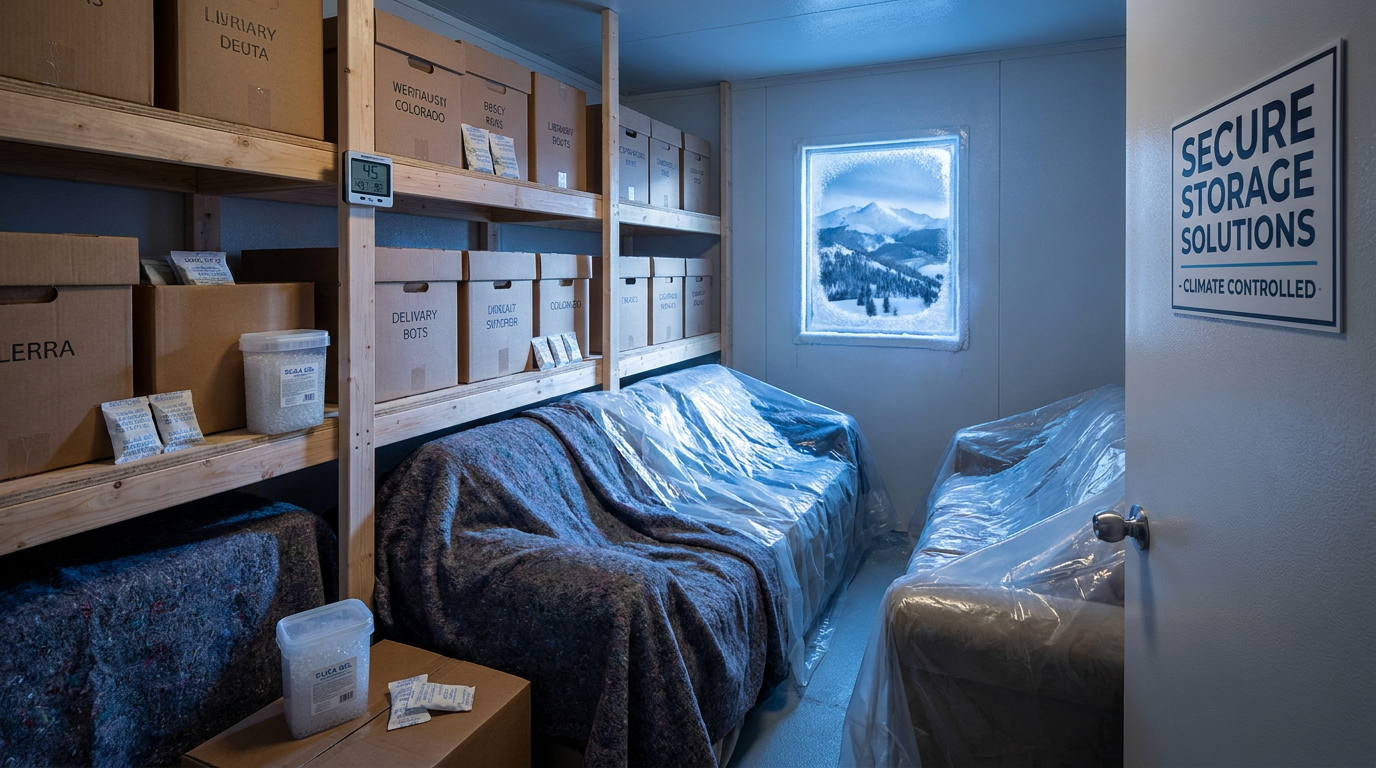
Climate-controlled units add another protection layer by maintaining temperatures between 55-80 degrees Fahrenheit and humidity below 55%. According to the Climate Control Storage Association, temperature fluctuations cause more damage to stored electronics, documents, and furniture than theft. Elk Mountain Storage does not currently offer climate-controlled units, so tenants storing temperature-sensitive items should use insulated packing and ask our team about the best interior options.
9. Insurance and Protection Plan Options
Even the most secure facilities cannot guarantee zero risk. Comprehensive tenant protection plans cover theft, fire, water damage, and other losses typically excluded from homeowners or renters insurance policies. Coverage limits range from $2,000 to $15,000 depending on the plan tier, with monthly premiums between $8 and $30.
Review your existing insurance policies before purchasing facility protection. State Farm, Allstate, and USAA homeowners policies often extend limited coverage to off-site storage, though with lower limits and higher deductibles. For valuable items, consider a scheduled personal property floater that provides agreed-value coverage regardless of storage location. Learn more about storage protection plans and coverage options.
Security Feature Comparison: Basic vs. Premium Facilities
Not all storage facilities invest equally in security infrastructure. The following comparison table, based on 2025 industry data from Inside Self Storage and the Self Storage Almanac, illustrates typical differences between budget and premium facilities.
| Security Feature | Budget Facility | Premium Facility | Impact on Security |
|---|---|---|---|
| Perimeter Fencing | 4-5 ft chain link | 6-8 ft steel with razor wire | +45% deterrence |
| Gate Access | Shared code or key | Unique PIN + app access | +85% access control |
| Video Surveillance | Entry points only, 7-day storage | Full coverage, 30-90 day cloud | +67% investigation success |
| Unit Alarms | Not available | Individual door sensors | +67% break-in reduction |
| Staffing | Part-time, limited hours | Full-time + overnight patrols | +89% incident resolution |
| Lighting | Partial coverage, some dark areas | Full LED with motion sensors | +38% camera effectiveness |
| Monthly Cost (10x10) | $75-125 | $150-250 | Variable by market |
The price difference between budget and premium facilities typically ranges from $50-125 monthly for comparable unit sizes. Whether this premium is worthwhile depends on what you're storing. Family heirlooms, business inventory, and high-value items justify premium security, while seasonal decorations or old furniture may not.
Advanced Security Technology for 2026
The self-storage industry continues adopting new security technologies that were unavailable just a few years ago. According to Dwight Broering, VP of Operations at The Jenkins Organization, "Motion-sensing, in-unit security devices have produced far clearer ROI than the smart-lock ecosystem." Understanding these emerging technologies helps you identify forward-thinking facilities.
Smart Lock Systems
Bluetooth and WiFi-enabled smart locks allow renters to unlock units via smartphone apps, eliminating physical keys entirely. Nokē Smart Entry, acquired by Janus International in 2019, leads this market with locks that log every access attempt and send real-time alerts to owners. Smart locks cost facilities $150-300 per unit to install, with savings on rekeying and lost key replacements.
For renters, smart locks offer convenience and enhanced security tracking. You can grant temporary access to movers or family members without sharing physical keys, then revoke access instantly. The Nokē app shows exactly when your unit was accessed and by whom, providing peace of mind between visits.
AI-Powered Video Analytics
Artificial intelligence transforms passive surveillance into active threat detection. Systems from Verkada, Rhombus, and Avigilon analyze video feeds in real-time, identifying suspicious behaviors like loitering, tailgating, or attempted break-ins. When the AI detects anomalies, it alerts on-site staff or remote monitoring centers within seconds.
A 2025 Avigilon case study documented a 73% reduction in security incidents at facilities deploying AI analytics compared to traditional camera systems. The technology distinguishes between normal activity, like a renter loading a truck, and concerning behavior, like someone testing multiple unit doors.
In-Unit Environmental Sensors
Beyond security, smart sensors monitor temperature, humidity, and water intrusion inside individual units. Companies like Temp Stick and SensorPush offer WiFi-connected devices that alert renters when conditions exceed safe thresholds. For climate-sensitive items like wine collections, musical instruments, or archival documents, these sensors provide early warning of HVAC failures or water leaks.
Some premium facilities now include environmental monitoring as a standard amenity, with alerts sent directly to renters' phones. This technology proves especially valuable in regions with extreme weather, where a failed air conditioner could damage belongings within hours during summer heat.
Red Flags: Signs of Inadequate Security
Knowing what to avoid is as important as knowing what to seek. The following warning signs indicate a facility may not adequately protect your belongings. If you observe three or more of these issues during a facility tour, consider alternative options.
Physical Security Deficiencies
- Broken or damaged fencing with visible gaps or cut sections
- Gates that remain open or can be easily bypassed on foot
- Non-functional cameras with broken housings or disconnected cables
- Burned-out lights creating dark zones in hallways or parking areas
- Visible rust or damage on unit doors and frames
- Overgrown vegetation providing concealment near units
Operational Warning Signs
- Staff cannot explain security features or seem unfamiliar with systems
- No identification required to tour the facility or access units
- Shared access codes used by all tenants rather than individual PINs
- No visitor logs or sign-in requirements for non-tenants
- Reluctance to show security footage or discuss incident response procedures
- Multiple vacant units with doors ajar or damaged locks
Online Review Patterns
Before visiting any facility, search for reviews on Google, Yelp, and SpareFoot. Look specifically for mentions of break-ins, theft, or security concerns. A single negative review may reflect an isolated incident, but patterns of security complaints across multiple reviews indicate systemic problems. Pay attention to management responses; facilities that dismiss security concerns rather than addressing them often have deeper issues.
Questions to Ask Before Signing a Lease
Prepare these questions for your facility tour to evaluate security comprehensively. Staff responses reveal both the facility's security posture and their commitment to tenant safety.
Access and Surveillance Questions
- How often do access codes change, and how are new codes distributed?
- How many cameras cover the facility, and where are recordings stored?
- How long is surveillance footage retained before being overwritten?
- Can I access my unit 24/7, or are there restricted hours?
- What happens if someone enters my access code after hours?
Staffing and Response Questions
- What are your staffing hours, and who monitors the facility overnight?
- How quickly does staff respond to alarms or security alerts?
- Have there been any break-ins or thefts in the past 12 months?
- What is your procedure if a tenant reports suspicious activity?
- Do you conduct regular security audits or system maintenance?
Protection and Insurance Questions
- What protection plans do you offer, and what do they cover?
- Are there any exclusions I should know about in the protection plan?
- What is the claims process if my belongings are damaged or stolen?
- Do you require proof of insurance, or can I use your protection plan?
Security Checklist for Facility Evaluation
Use this checklist during facility tours to systematically evaluate security features. Print it or save it to your phone for reference. A facility scoring below 60% on this checklist may not provide adequate protection for valuable items.
Perimeter Security (20 points possible)
- Fencing 6+ feet tall with no gaps (5 points)
- Automated gate with individual access codes (5 points)
- Gate closes automatically within 30 seconds (5 points)
- Secondary pedestrian gate also secured (5 points)
Surveillance Systems (25 points possible)
- Cameras visible at entry, hallways, and unit areas (10 points)
- Footage retained 30+ days (5 points)
- Night vision or infrared capability (5 points)
- No visible blind spots during tour (5 points)
Unit-Level Security (20 points possible)
- Individual unit alarms available (10 points)
- Solid steel doors with reinforced frames (5 points)
- High-quality locks permitted or provided (5 points)
Staffing and Operations (20 points possible)
- On-site staff during business hours (10 points)
- After-hours monitoring or patrols (5 points)
- Staff knowledgeable about security systems (5 points)
Environmental and Additional (15 points possible)
- Adequate lighting throughout property (5 points)
- Fire suppression and smoke detection (5 points)
- Protection plan options available (5 points)
What Type of Lock Is Best for a Storage Unit?
Disc locks, also called circular padlocks, provide the best security for storage units. Their shrouded shackle design leaves minimal exposed metal for cutting tools to grip, while hardened steel construction resists drilling and prying. According to Master Lock security testing, disc locks withstand bolt cutter attacks 15x longer than standard padlocks.
The ABUS Diskus 20/70 and Master Lock M40XD represent professional-grade options, priced between $25-45. Both feature hardened steel bodies, anti-pick pin tumbler mechanisms, and weatherproof seals for outdoor units. Avoid budget disc locks under $15, which often use softer metals that compromise security.
Some facilities require or provide specific lock types. Nokē smart locks and similar electronic systems offer convenience and access logging but depend on battery power and smartphone connectivity. For maximum security, ask whether the facility permits tenant-provided disc locks rather than requiring their proprietary options.
How Often Should You Check Your Storage Unit?
Security experts recommend visiting your storage unit at least once every 30 days, even if you don't need to access your belongings. Regular visits serve multiple purposes: verifying that locks and seals remain intact, checking for signs of water intrusion or pest activity, and ensuring the facility maintains advertised security standards.
During each visit, photograph the exterior of your unit including the lock and door seal. These images establish a baseline condition and provide evidence if damage occurs between visits. Check that surveillance cameras near your unit remain operational and that lighting functions properly.
For high-value storage, consider more frequent visits or installing your own monitoring devices. WiFi cameras like Wyze or Blink can be placed inside units with power access, sending alerts whenever motion is detected. Environmental sensors track temperature and humidity changes that might indicate HVAC problems or water leaks.
Do All Storage Facilities Have 24/7 Surveillance?
No, surveillance coverage varies significantly between facilities. A 2025 Self Storage Association survey found that 78% of facilities have some video surveillance, but only 52% maintain true 24/7 recording with adequate retention periods. Budget facilities often limit cameras to entry gates and office areas, leaving unit hallways and parking areas unmonitored.
When evaluating surveillance claims, ask specific questions about camera locations, recording schedules, and footage retention. "24/7 surveillance" may mean continuous recording or simply that cameras are present around the clock without actually recording. Cloud-based storage systems from providers like Verkada and Eagle Eye Networks offer more reliable retention than on-site DVR systems prone to failure or tampering.
Are Smart Locks Worth It for Self-Storage in 2026?
Smart locks offer convenience and access tracking benefits that justify their cost for frequent-access users and business storage applications. The ability to grant temporary access codes, receive entry alerts, and review access history provides security visibility impossible with traditional locks. Nokē, the market leader, reports that smart-lock-equipped units experience 34% fewer unauthorized access attempts.
However, smart locks introduce new considerations. Battery life typically ranges from 12-24 months, requiring periodic replacement. Smartphone dependency means access problems if your phone dies or loses connectivity. Some smart lock systems store access data on facility servers, raising privacy concerns for business users storing sensitive materials.
For occasional personal storage, traditional disc locks remain the cost-effective choice. For business inventory, frequent access needs, or situations requiring access delegation, smart locks justify the $50-100 annual premium most facilities charge for the technology.
Choosing Secure Storage in the Gunnison Valley
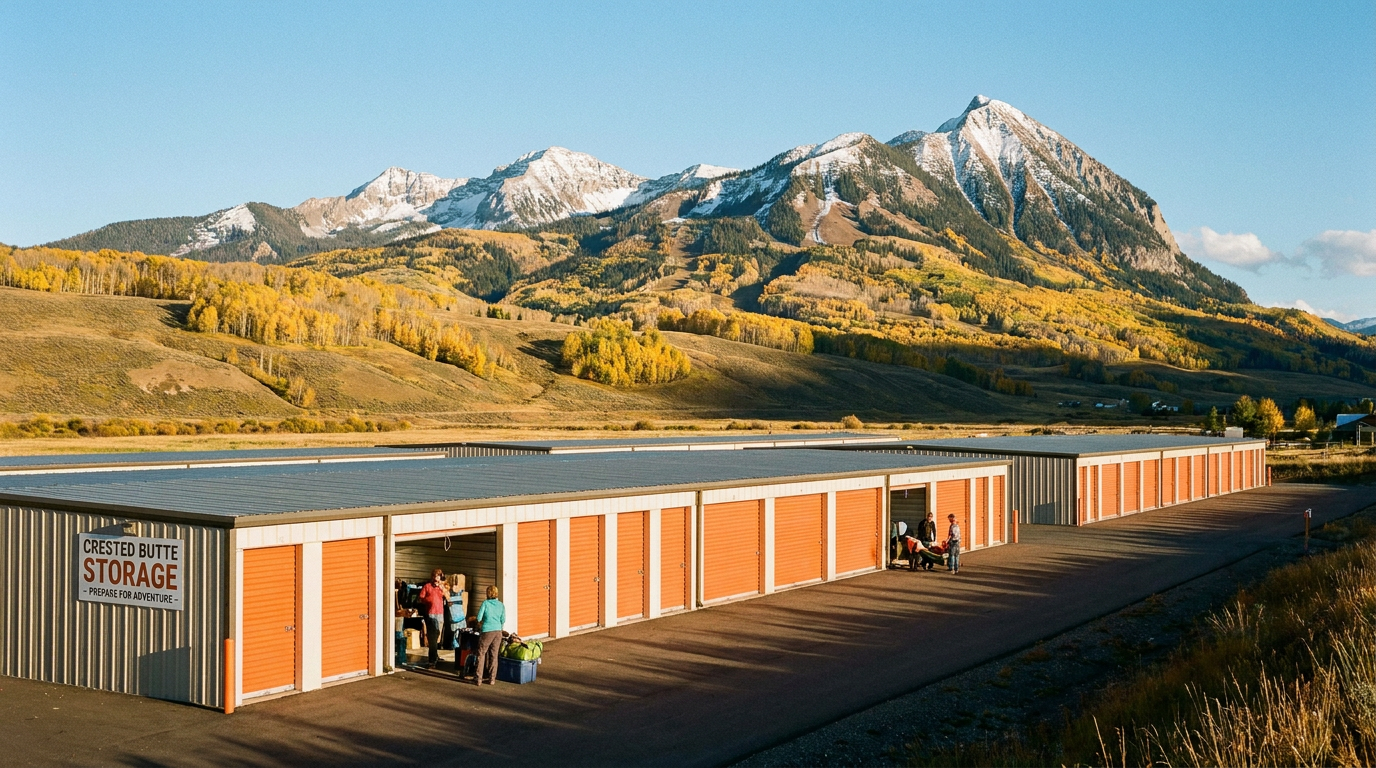
Local storage facilities face unique security challenges in mountain communities. Seasonal population fluctuations, remote locations, and extreme weather conditions all impact security infrastructure requirements. When evaluating facilities in Crested Butte and surrounding areas, prioritize those with year-round staffing, climate-controlled options for temperature-sensitive items, and proven track records through Colorado winters.
Elk Mountain Storage provides locally owned and operated storage with 24/7 secure access for both personal and business needs. Our facility offers multiple unit sizes from compact 5x6 interior units to spacious 10x30 drive-up options. Our units are not climate controlled, so pack temperature-sensitive items with insulated materials to protect them from Gunnison Valley temperature extremes ranging from -20 to 90+ degrees Fahrenheit.
Security features at modern facilities should match the value of what you're storing. For seasonal gear and household overflow, basic security may suffice. For business inventory, family heirlooms, or irreplaceable items, invest in facilities offering comprehensive protection layers. The monthly premium for enhanced security, typically $25-75 above base rates, costs far less than replacing stolen or damaged belongings.
|