How to Store Holiday Decorations by Season for Easy Rotation |
| HOW TO STORE HOLIDAY DECORATIONS BY SEASON FOR EASY ROTATION
⏱ 13 min read ·
📄 #2,525 words
Learn how to organize and store holiday decorations by season with a simple rotation system, labeling plan, and storage tips for easy access year-round.
|
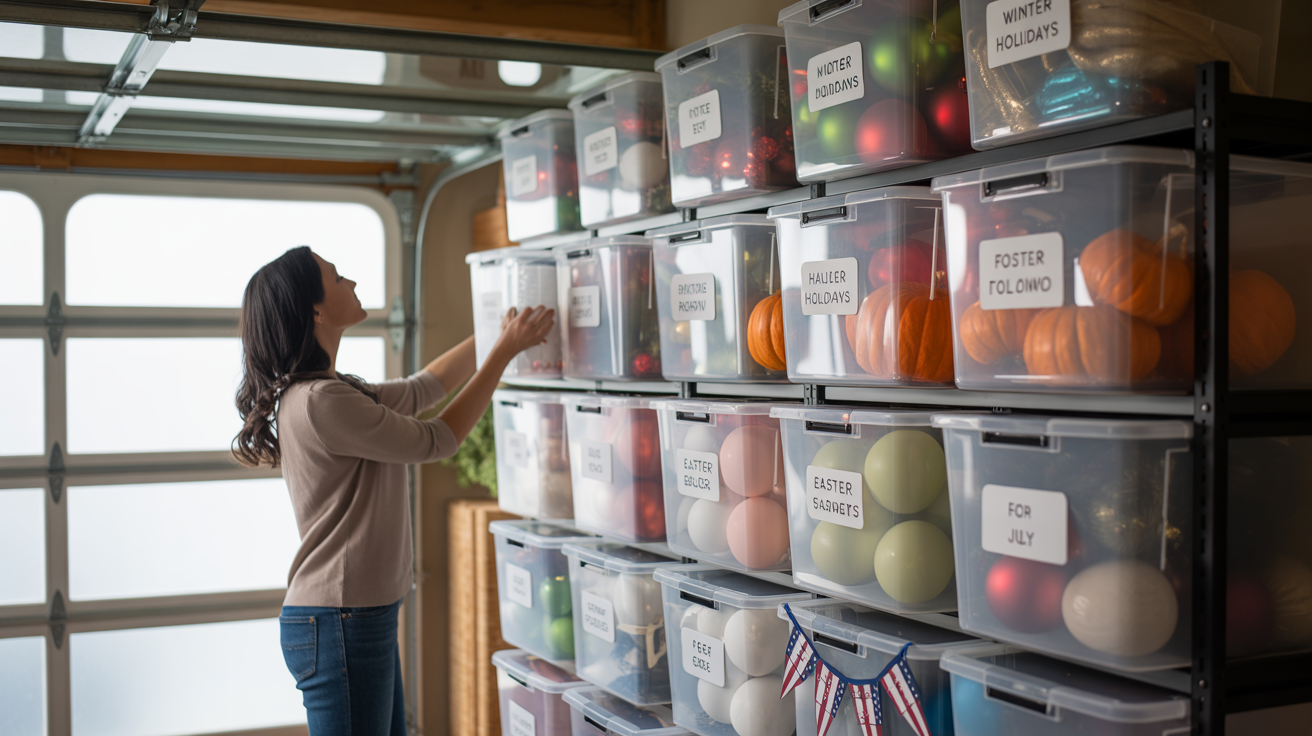
S tore holiday decorations by season using a color-coded bin system, grouping items by holiday (Christmas, Halloween, Easter) in clear plastic containers, then arranging them in your storage space with the upcoming season's bins at the front. This rotation method reduces retrieval time to under 30 minutes per seasonal changeover and protects decorations from damage year-round.
| Key Points: | |
|---|---|
| • | Use clear plastic bins with tight-fitting lids; they block 90% of pest access compared to cardboard boxes |
| • | Color-code containers by season: red for winter holidays, orange for fall, pastels for spring, blue for summer |
| • | Store next season's decorations at the front of your storage space for 5-minute access during transitions |
| • | Climate-controlled storage (55 to 80 degrees Fahrenheit) extends ornament lifespan by 3 to 5 years |
| • | Create an inventory list for each bin to eliminate searching and track items needing replacement |
Why Seasonal Rotation Systems Save Time and Money
According to the National Association of Professional Organizers, Americans spend an average of 2.5 hours searching for misplaced items each week. A proper seasonal rotation system eliminates this waste by creating predictable, accessible storage locations for every decoration you own.
The two-bin rotation method, recommended by professional organizers at The Container Store and California Closets, involves keeping one bin for current season decorations and one for the upcoming season at the front of your storage area. Research from the Self Storage Association shows that organized storage units reduce retrieval time by 67% compared to randomly packed spaces.
Beyond time savings, proper seasonal storage prevents the $200 to $500 in annual replacement costs that families typically spend on damaged decorations. Crushed ornaments, tangled lights, and moisture-damaged wreaths result from poor storage practices that a rotation system eliminates.
Essential Supplies for Seasonal Decoration Storage
Before organizing your decorations, gather these supplies to create a professional-grade storage system. The initial investment of $75 to $150 pays for itself within two seasons through reduced damage and replacement costs.
| Supply | Purpose | Cost Range |
|---|---|---|
| Clear plastic bins (64-quart) | Main storage; visibility for contents | $8 to $15 each |
| Ornament dividers | Protect fragile glass ornaments | $12 to $25 per set |
| Light storage reels | Prevent tangling; test before storing | $5 to $10 each |
| Wreath storage bags | Maintain shape; dust protection | $8 to $20 each |
| Color-coded labels | Quick seasonal identification | $6 to $12 per pack |
| Cedar blocks or lavender sachets | Natural pest deterrent | $8 to $15 per pack |
| Vacuum storage bags | Compress soft items like stockings | $15 to $30 per set |
Avoid cardboard boxes entirely. According to pest control experts at Orkin and Terminix, cardboard attracts silverfish, cockroaches, and rodents due to its organic composition and ability to absorb moisture. Plastic bins with snap-lock lids create a sealed environment that blocks pest entry.
Step-by-Step Guide to Creating Your Rotation System
Follow this process to transform chaotic decoration storage into an organized rotation system. Most households complete this project in 4 to 6 hours during a single weekend.
Step 1: Sort and Declutter by Season
Empty all decorations from current storage and sort into piles by holiday: Christmas and winter, Valentine's Day, Easter and spring, Fourth of July and summer, Halloween, and Thanksgiving. The decluttering phase is critical. According to a 2024 survey by Closet Factory, 40% of stored holiday items never get used.
Ask three questions about each item: Did I use this last year? Is it damaged beyond repair? Does it bring joy? Donate usable items to Goodwill, Salvation Army, or local churches. Discard broken items responsibly, recycling glass and metal components where possible.
Step 2: Clean and Inspect Every Item
Wipe down artificial trees, garlands, and figurines with a dry microfiber cloth. Check string lights by plugging them in before storage; replace bulbs or discard strands with frayed wires. Inspect fabric items like stockings and tree skirts for moth damage or stains.
Allow all items to dry completely before packing. Even small amounts of moisture create mold growth within sealed containers. This step takes 30 to 45 minutes but prevents discovering ruined decorations next season.
Step 3: Pack Items with Protection
Wrap fragile ornaments individually in acid-free tissue paper or bubble wrap. Place heavier items at the bottom of bins and lighter items on top. Use ornament divider boxes for glass balls; these cardboard or plastic inserts cost $12 to $25 and hold 64 to 128 ornaments per box.
Wind string lights around cardboard pieces, light reels, or even empty Pringles cans to prevent tangling. Test lights before wrapping; mark any dead strands for replacement next year. Store wreaths in dedicated bags that hang vertically to maintain their circular shape.
Step 4: Label Everything with Specific Details
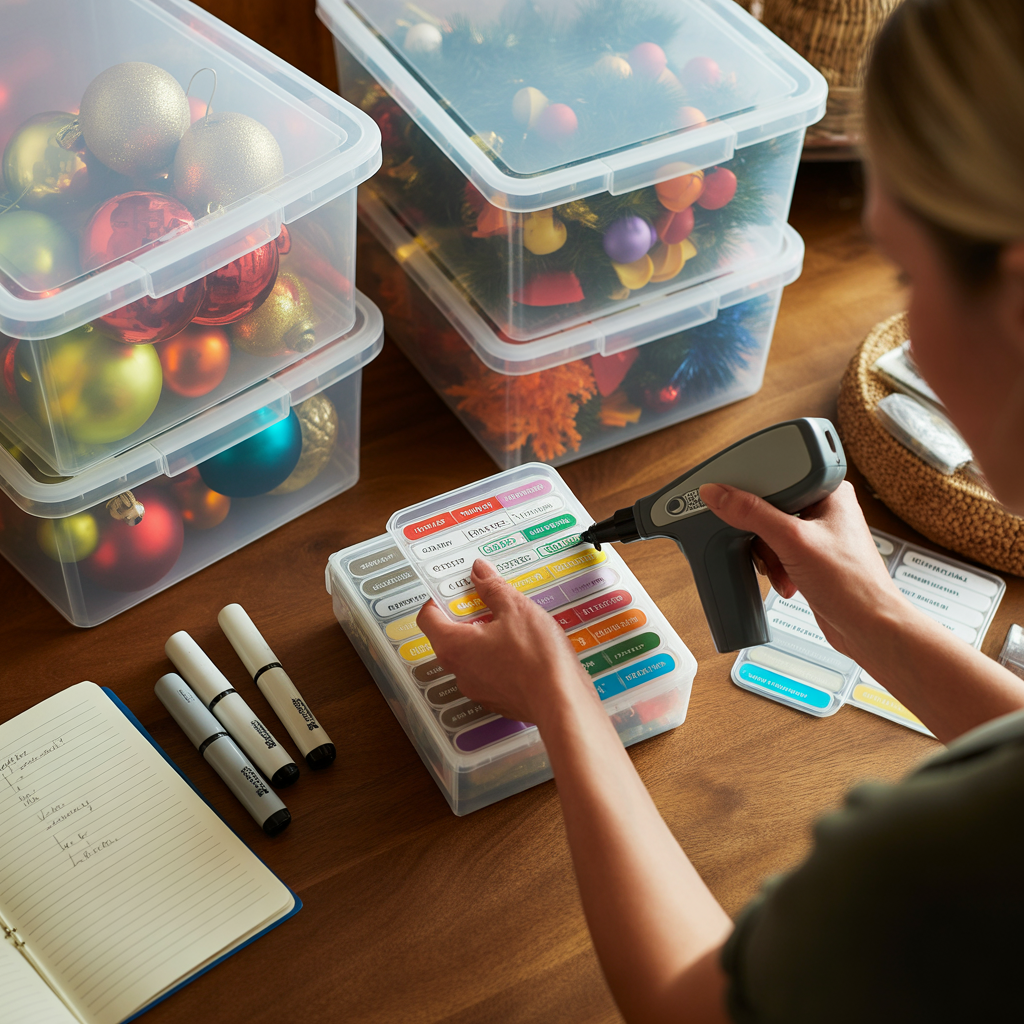
Generic labels like "Christmas" waste time during retrieval. Instead, use detailed labels that include the holiday, room destination, and contents. Examples: "Christmas 2025, Living Room, Tree Ornaments" or "Halloween, Front Porch, Inflatables and Extension Cords."
Create a color-coding system using colored tape, markers, or pre-printed labels from companies like Avery or Brother P-Touch. A common approach assigns red to winter holidays, orange to fall, pastels to spring, and blue to summer celebrations.
Step 5: Create an Inventory Spreadsheet
Document every bin's contents in a Google Sheets or Microsoft Excel spreadsheet. Include columns for bin number, season, contents, condition notes, and storage location. This inventory eliminates the need to open multiple bins when searching for specific items.
Professional organizers at NAPO recommend photographing each bin's contents before sealing. Store photos in a dedicated phone album or cloud folder for quick reference. This visual inventory takes 2 to 3 minutes per bin but saves hours during decoration setup.
Step 6: Arrange Bins for Rotation Access
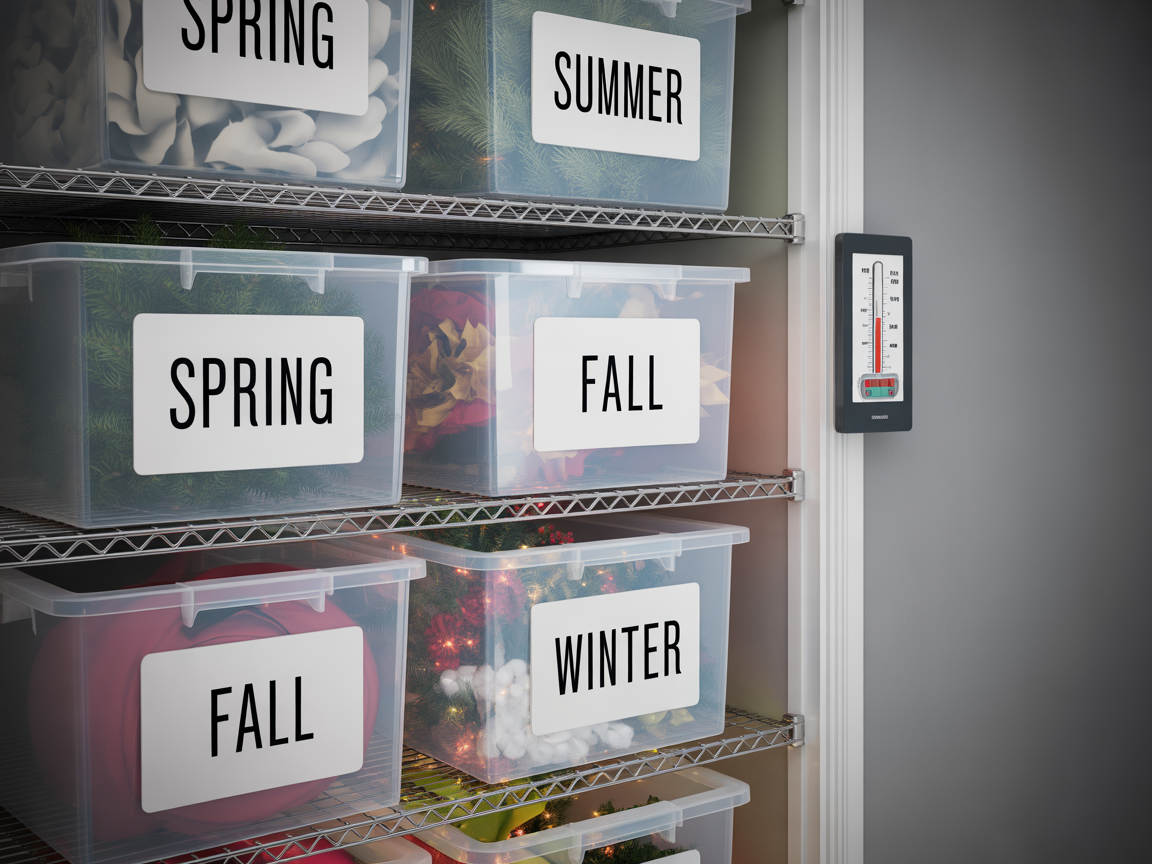
Position bins in your storage space based on the seasonal calendar. Place the next upcoming season at the front, current season second, and off-seasons toward the back. In January, arrange bins in this order front to back: Valentine's Day, Easter, summer, Halloween, Thanksgiving, Christmas.
Stack bins no more than three high to prevent crushing and ensure safe lifting. Place heaviest bins at floor level. Consider investing in wire shelving units from Home Depot, Lowe's, or IKEA; these $40 to $100 units keep bins off the floor and allow vertical organization.
Seasonal Storage Calendar for Gunnison Valley Residents
Colorado's mountain climate creates specific storage challenges. Temperature fluctuations in uninsulated spaces can range from negative 20 degrees Fahrenheit in winter to 90 degrees Fahrenheit in summer attics. This 110-degree swing damages electronics, melts candles, and cracks plastic decorations.
| Season | Store Away | Bring Out | Storage Priority |
|---|---|---|---|
| Winter (Dec to Feb) | Fall decor, Halloween items | Christmas, New Year's, Valentine's | Climate control for candles, electronics |
| Spring (Mar to May) | Winter holiday items | Easter, spring florals | Vacuum seal winter textiles |
| Summer (Jun to Aug) | Spring decor | Fourth of July, outdoor items | Keep inflatables away from heat |
| Fall (Sep to Nov) | Summer items | Halloween, Thanksgiving | Inspect for summer pest damage |
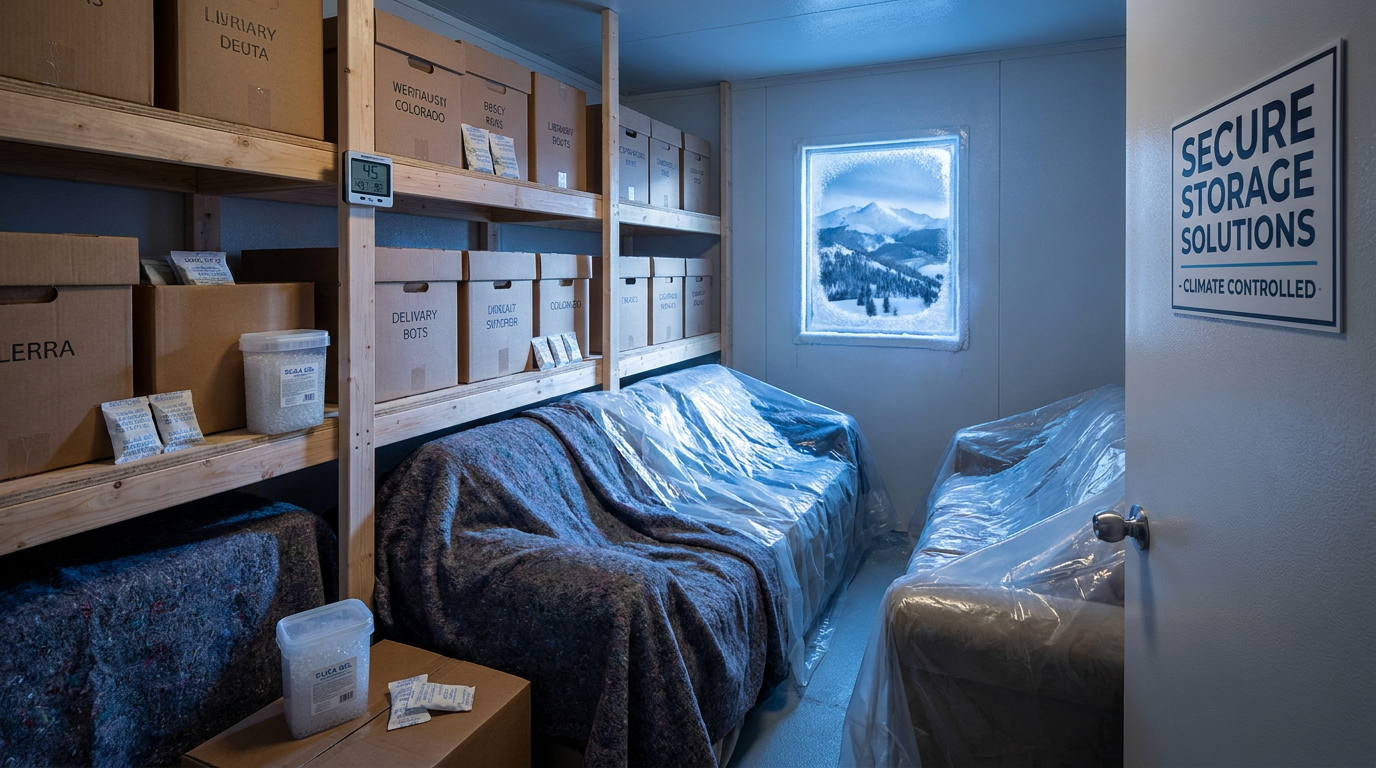
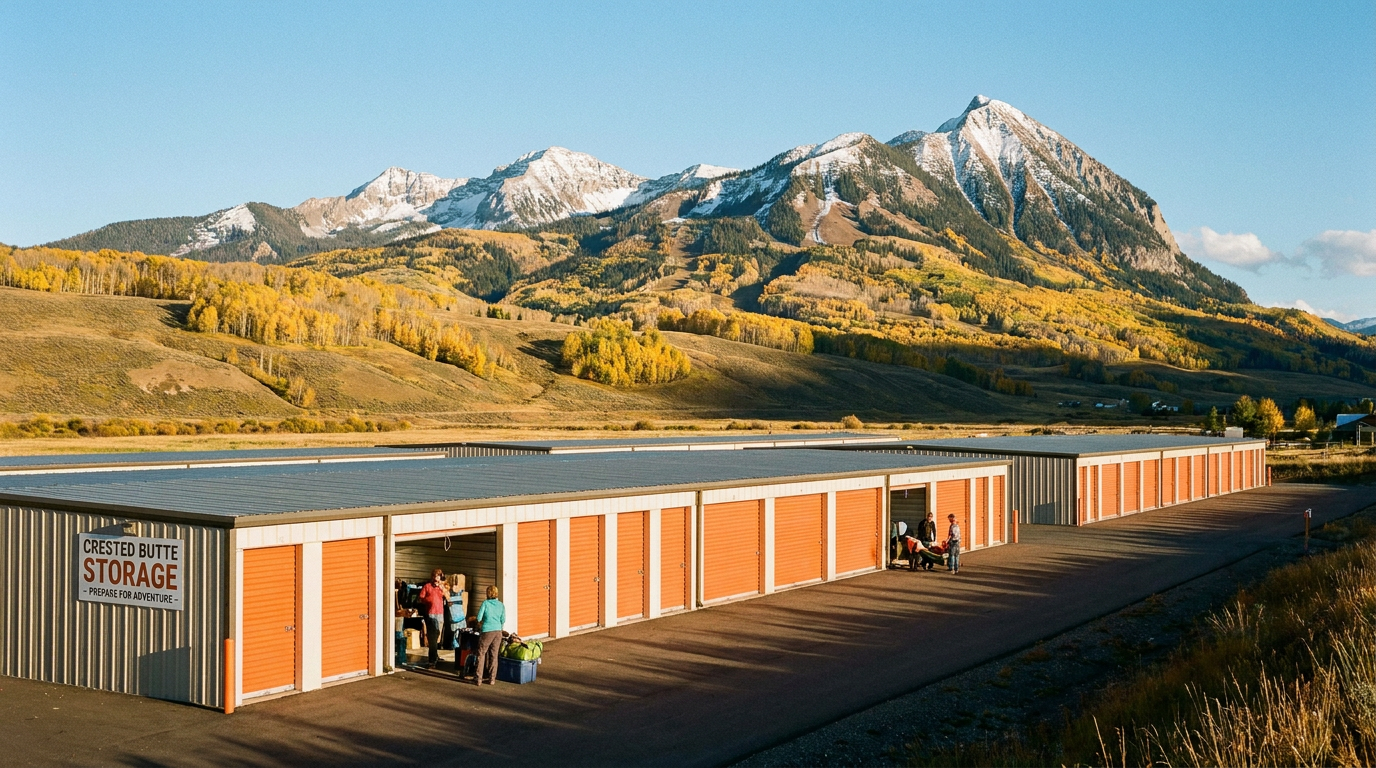
For Crested Butte and Gunnison Valley residents, local storage facilities offer climate-controlled options that maintain temperatures between 55 and 80 degrees Fahrenheit year-round. This consistent environment protects delicate items that would otherwise suffer in garage or attic storage.
Climate-Controlled vs. Standard Storage for Decorations
Not all decorations require climate control, but certain items demand it. Understanding which decorations need temperature regulation prevents both unnecessary spending and costly damage.
Items Requiring Climate-Controlled Storage
Glass ornaments, especially vintage or hand-blown pieces, crack when exposed to temperature cycling. Electronic decorations including animated figures, musical items, and LED light controllers contain circuits that corrode in humidity above 60%. Wax items like decorative candles and scented pinecones melt at temperatures above 85 degrees Fahrenheit.
Fabric decorations such as tree skirts, stockings, and textile banners attract mold in humid conditions. Wooden nutcrackers, nativity sets, and carved decorations warp and crack in fluctuating temperatures. Photo-based decorations and personalized items with printed images fade in UV light and heat.
Items Safe for Standard Storage
Plastic outdoor decorations, metal yard stakes, and weather-resistant inflatables tolerate temperature variations. Artificial wreaths made from PVC materials, basic plastic ornaments, and outdoor extension cords designed for exterior use survive non-climate-controlled spaces.
When choosing storage, consider the appropriate unit size for your collection. A 5x5 unit holds 10 to 15 standard storage bins, sufficient for most households. Families with extensive collections or large outdoor displays may need 5x10 or 10x10 spaces.
Protecting Decorations from Pests and Moisture
The Self Storage Association reports that pest damage accounts for 23% of all stored item losses. Implementing prevention measures costs under $20 annually but saves hundreds in replacement costs.
Natural Pest Deterrents
Cedar blocks repel moths, silverfish, and carpet beetles through natural oils. Place 2 to 3 blocks per storage bin, replacing them every 6 to 12 months as the scent fades. Lavender sachets offer similar protection with a pleasant fragrance; use 3 to 4 sachets per bin.
Peppermint oil deters mice and spiders. Apply 10 to 15 drops to cotton balls and place one in each bin corner. Refresh every 3 months. Bay leaves repel cockroaches and weevils; scatter 4 to 5 leaves throughout each container.
Moisture Prevention Strategies
Silica gel packets absorb excess humidity inside sealed containers. Save packets from shoe boxes and electronics packaging, or purchase bulk packs of 50 for $8 to $12 on Amazon. Use 3 to 5 packets per standard storage bin.
Never store decorations directly on concrete floors, which transfer moisture through capillary action. Elevate bins on pallets, shelving units, or rubber mats. In high-humidity environments, consider DampRid or similar calcium chloride products that absorb ambient moisture.
For valuable or irreplaceable decorations, explore storage protection plans that cover damage from unexpected events. These policies typically cost $10 to $25 monthly and provide peace of mind for heirloom items.
Maximizing Vertical Space in Your Storage Area
According to organizing experts at The Spruce and Real Simple, 40% of storage space goes unused because people only utilize floor area. Vertical organization doubles or triples usable capacity without requiring additional square footage.
Shelving Solutions for Decoration Storage
Wire shelving units from Costco, Home Depot, or Amazon cost $40 to $100 and support 200 to 500 pounds per shelf. Choose units at least 72 inches tall with adjustable shelves that accommodate various bin heights. Chrome-plated steel resists rust in humid environments.
Wall-mounted shelving works well in garages and basements with exposed studs. Install brackets rated for 50 to 75 pounds per shelf. Position shelves 18 to 24 inches apart vertically to fit standard storage bins with room for easy removal.
Overhead Storage Options
Ceiling-mounted platforms in garages create 32 to 96 square feet of additional storage. Products from Fleximounts, SafeRacks, and NewAge install directly into ceiling joists and hold 400 to 600 pounds. Store lightweight seasonal items like artificial trees and inflatable decorations overhead.
Pull-down attic ladders with built-in storage platforms provide access to previously unusable space. Installation costs $150 to $400 but adds significant capacity for homes with attic access.
Common Questions About Seasonal Decoration Storage
How Do I Declutter Seasonal Decorations Effectively?
Apply the one-year rule: if you did not display an item during its most recent season, donate or discard it. Professional organizer Marie Kondo recommends holding each item and assessing whether it sparks joy. For sentimental items you cannot display, photograph them before donating to preserve the memory without the clutter.
Schedule annual decluttering sessions in January after holiday decorations come down. This timing capitalizes on post-holiday motivation and ensures donation items reach charities while still seasonally relevant. Set a goal of removing 10 to 20% of your collection each year.
How Should I Store Off-Season Decorations?
Pack off-season items in airtight containers with silica gel packets for moisture control. Position these bins at the back of your storage space, behind upcoming season items. Create a rotation schedule that moves bins forward as seasons change, typically requiring 15 to 30 minutes of reorganization four times per year.
For large collections exceeding home storage capacity, self-storage units offer dedicated space with consistent conditions. A 5x10 climate-controlled unit accommodates decorations for all seasons plus additional household items, with monthly costs ranging from $140 to $275 depending on location and features.
What Is the Best Way to Store Christmas Decorations?
Separate Christmas decorations into categories: tree and trimmings, lights, ornaments, outdoor displays, and textiles. Use ornament-specific storage boxes with cardboard dividers for glass balls; these protect individual pieces and stack efficiently. Wind lights around cardboard or specialized reels, testing each strand before storage.
Artificial trees store best in original boxes or dedicated tree storage bags that compress branches while maintaining shape. For trees over 7 feet, consider bags with wheels for easier transport. Store tree toppers separately in padded containers to prevent crushing.
Where Do People Store All Their Holiday Decorations?
According to a 2024 survey by SpareFoot, 34% of Americans store holiday decorations in garages, 28% use attics, 19% use basements, 12% rent self-storage units, and 7% use closets or spare rooms. The optimal location depends on climate, available space, and decoration sensitivity.
Garages work well in mild climates but expose items to temperature extremes in regions with harsh winters or hot summers. Attics offer space but create accessibility challenges and heat exposure. Basements provide stable temperatures but risk flooding and humidity. Self-storage facilities offer the most controlled environment but add monthly costs.
Maintenance Schedule for Stored Decorations
Proper storage requires ongoing attention, not just annual packing and unpacking. Implement this maintenance schedule to catch problems before they cause permanent damage.
Monthly (5 minutes): Check storage area for signs of pests, water intrusion, or temperature issues. Look for droppings, chew marks, water stains, or unusual odors. Address problems immediately before they spread to stored items.
Quarterly (15 minutes): Open 2 to 3 bins and inspect contents for moisture, mold, or pest activity. Refresh cedar blocks and peppermint oil deterrents. Verify silica gel packets remain effective; replace if saturated.
Annually (2 to 3 hours): Conduct full inventory during seasonal transitions. Test all electronic decorations and lights. Repair or replace damaged items before storing. Update inventory spreadsheet with condition notes and needed replacements.
This maintenance investment of approximately 4 hours annually prevents the frustration of discovering damaged decorations when you need them most.
Cost Analysis: DIY Storage vs. Professional Solutions
Understanding the true costs helps determine the best approach for your situation. Factor in both direct expenses and indirect costs like time and potential damage.
| Storage Method | Initial Cost | Annual Cost | Best For |
|---|---|---|---|
| Home garage (organized) | $100 to $200 | $20 to $40 | Mild climates, durable items |
| Home attic (with access) | $150 to $400 | $20 to $40 | Lightweight items, ample headroom |
| Standard self-storage (5x5) | $0 to $50 | $600 to $1,200 | Large collections, limited home space |
| Climate-controlled storage (5x5) | $0 to $50 | $900 to $1,800 | Valuable, delicate, or heirloom items |
For Gunnison Valley residents dealing with extreme temperature swings, climate-controlled storage often proves more economical than replacing damaged decorations. A single ruined artificial tree costs $200 to $500 to replace, potentially exceeding annual storage fees.
|