How to Choose Storage Unit Size: Room-by-Room Calculator Guide |
| HOW TO CHOOSE STORAGE UNIT SIZE: ROOM-BY-ROOM CALCULATION METHOD
⏱ 11 min read ·
📄 #2,032 words
Calculate your exact storage unit size using our room-by-room method. Get specific square footage for bedrooms, kitchens, and living areas to avoid overpaying.
|
C alculate your storage unit size by measuring items room by room, then matching the total square footage to standard unit dimensions. A typical bedroom requires 50 square feet (5x10 unit), a living room needs 75 to 100 square feet, and a full kitchen fits in 25 to 50 square feet. Add 10 to 20 percent extra space for walkways and stacking access.

| Key Points: | |
|---|---|
| • | One bedroom equals approximately 50 square feet; a 2-bedroom apartment fits in a 10x10 unit (100 square feet) |
| • | Standard storage units have 8-foot ceilings, giving a 10x10 unit 800 cubic feet of capacity |
| • | Add 15 to 20 percent buffer space for aisle access and efficient loading |
| • | Climate-controlled units cost $140 to $271 per month and protect temperature-sensitive items |
| • | Disassembling furniture reduces space needs by 25 to 40 percent |
Why the Room-by-Room Method Works Better Than Guessing
According to storage industry data from Extra Space Storage, approximately 80 percent of first-time renters choose the wrong unit size. Half pay for unused space while others face upgrade fees within the first month. The room-by-room calculation method eliminates this costly guesswork by breaking your belongings into manageable categories.
This approach works because standard furniture dimensions remain consistent across manufacturers. A queen bed frame measures roughly 60 by 80 inches regardless of brand. A standard sofa runs 84 to 96 inches long. These predictable measurements allow accurate calculations without physically measuring every item.
The Self Storage Association reports that customers who calculate needs before renting save an average of $50 to $200 monthly by avoiding oversized units. For residents in the Gunnison Valley storing seasonal gear or relocating between properties, these savings add up quickly over multi-month rentals.
Complete Room-by-Room Storage Space Requirements
The following calculations assume standard American furniture sizes and 8-foot ceiling heights in storage units. Your actual needs may vary based on item quantity and whether you disassemble furniture before storing.
| Room Type | Typical Contents | Space Needed | Recommended Unit |
|---|---|---|---|
| Single Bedroom | Bed, dresser, nightstand, boxes | 40 to 60 sq ft | 5x10 |
| Master Bedroom | King bed, 2 nightstands, dresser, armoire | 75 to 100 sq ft | 10x10 |
| Living Room | Sofa, chairs, TV stand, coffee table | 75 to 100 sq ft | 10x10 |
| Kitchen | Appliances, table, chairs, boxes | 25 to 50 sq ft | 5x5 to 5x10 |
| Dining Room | Table, 4 to 6 chairs, hutch or buffet | 50 to 75 sq ft | 5x10 to 10x10 |
| Home Office | Desk, chair, bookshelf, file cabinet | 25 to 40 sq ft | 5x5 to 5x8 |
| Garage Items | Tools, lawn equipment, seasonal gear | 50 to 100 sq ft | 5x10 to 10x10 |
Step-by-Step Room Calculation Process
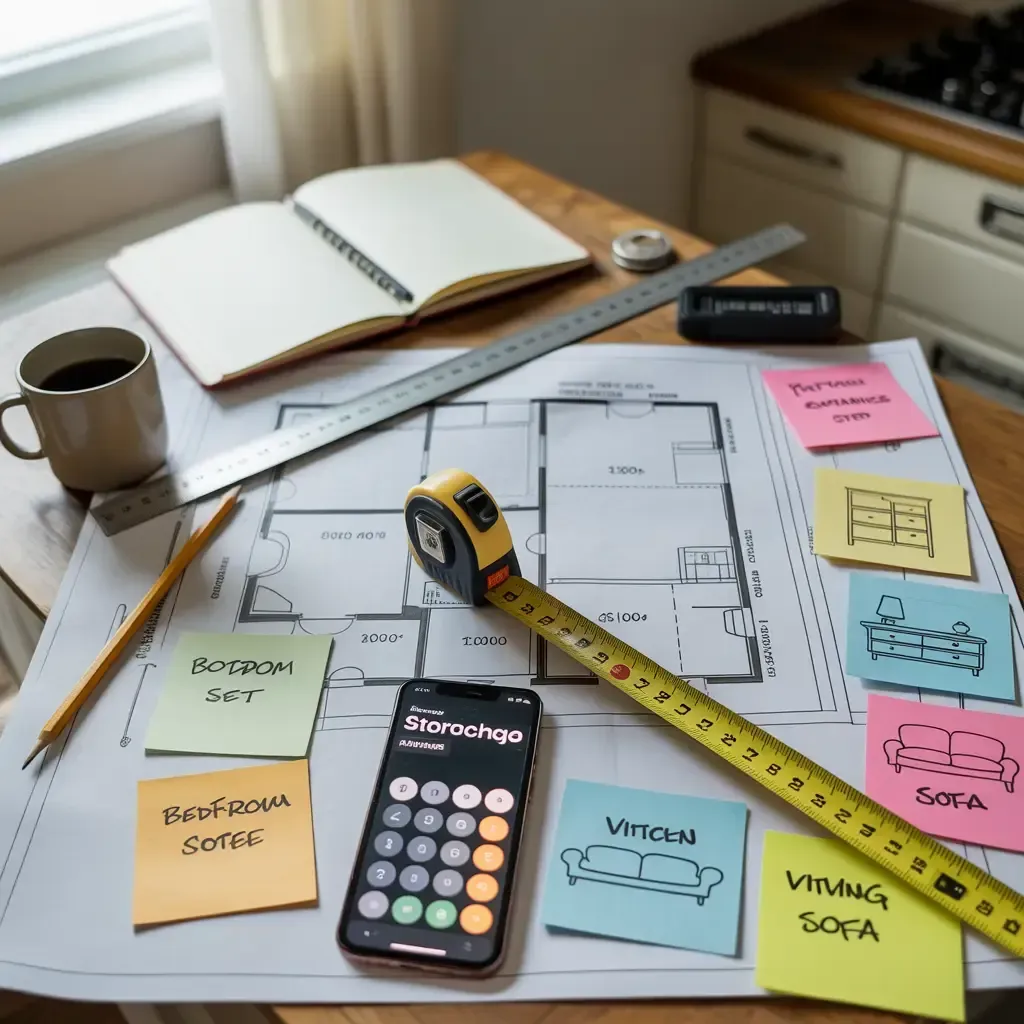
This four-step process, recommended by the National Self Storage Association, takes 30 to 45 minutes and produces accurate results for most households. Gather a measuring tape, notepad, and calculator before starting.
Step 1: Create a Room-by-Room Inventory
Walk through each room and list every item you plan to store. Include furniture, boxes, and loose items. Note which items can be disassembled, as this significantly impacts space requirements. A standard bed frame that takes 35 square feet assembled requires only 8 to 10 square feet when broken down.
For boxes, estimate using the standard moving box sizes: small boxes measure 16 by 12 by 12 inches (1.3 cubic feet), medium boxes measure 18 by 18 by 16 inches (3 cubic feet), and large boxes measure 24 by 18 by 18 inches (4.5 cubic feet). Most households pack 10 to 15 boxes per room.
Step 2: Measure Large Furniture Items
Focus measurement efforts on your largest pieces. Use this reference chart based on data from the American Home Furnishings Alliance for common furniture dimensions:
| Furniture Item | Typical Dimensions | Floor Space Required |
|---|---|---|
| King Bed (assembled) | 76 x 80 inches | 42 sq ft |
| Queen Bed (assembled) | 60 x 80 inches | 33 sq ft |
| 3-Seat Sofa | 84 x 36 inches | 21 sq ft |
| 6-Drawer Dresser | 60 x 18 inches | 7.5 sq ft |
| Dining Table (6 person) | 72 x 36 inches | 18 sq ft |
| Refrigerator | 36 x 30 inches | 7.5 sq ft |
| Washer or Dryer | 27 x 27 inches | 5 sq ft each |
Step 3: Calculate Total Square Footage
Add the floor space requirements from each room. For boxes and small items, estimate 2 square feet per box when stacked 4 high (utilizing the 8-foot ceiling). Apply this formula from Move.org: Total needed space equals (sum of all furniture footprints) plus (number of boxes divided by 4) plus 20 percent buffer.
For example, a 2-bedroom apartment calculation might look like this: bedroom furniture (100 square feet) plus living room (75 square feet) plus kitchen (35 square feet) plus 40 boxes (20 square feet when stacked) equals 230 square feet. Adding the 20 percent buffer brings the total to 276 square feet, suggesting a 10x30 unit or two smaller units.
Step 4: Match to Available Unit Sizes
Storage units come in standardized sizes across the industry. Review our storage unit size guide to compare options and find the closest match to your calculated needs. When your total falls between two sizes, choose the larger option for easier access and future flexibility.
Storage Unit Size Quick Reference by Home Type
The International Association of Movers provides these general guidelines based on typical household contents. Use these as starting points, then refine with your room-by-room calculations.
| Home Size | Square Footage | Recommended Unit | Cubic Feet |
|---|---|---|---|
| Studio Apartment | 300 to 500 sq ft | 5x5 to 5x10 | 200 to 400 |
| 1-Bedroom Apartment | 500 to 800 sq ft | 5x10 to 10x10 | 400 to 800 |
| 2-Bedroom Apartment | 800 to 1,100 sq ft | 10x10 to 10x15 | 800 to 1,200 |
| 3-Bedroom House | 1,200 to 1,800 sq ft | 10x15 to 10x20 | 1,200 to 1,600 |
| 4-Bedroom House | 1,800 to 2,500 sq ft | 10x20 to 10x30 | 1,600 to 2,400 |
| 5+ Bedroom House | 2,500+ sq ft | 10x30 or multiple units | 2,400+ |
Factors That Increase or Decrease Your Space Needs
Your calculated square footage represents a baseline. Several factors can shift your actual requirements by 15 to 30 percent in either direction. Consider these adjustments before finalizing your unit selection.
Factors That Reduce Space Requirements
Disassembling furniture provides the largest space savings. According to This Old House, breaking down beds, tables, and shelving units reduces their footprint by 25 to 40 percent. A king bed that requires 42 square feet assembled needs only 15 to 20 square feet when the frame is separated and the mattress stands on edge.
Vertical stacking maximizes the 8-foot ceiling height. Placing mattresses and box springs on edge, stacking sturdy boxes, and using shelving units effectively doubles usable space. The PODS storage guide recommends placing heaviest items on the bottom and lighter boxes on top, stacking no higher than 6 feet for stability.
Uniform box sizes eliminate wasted space between containers. Using standard moving boxes from companies like U-Haul or Home Depot creates stackable, stable columns. Avoid irregular containers that leave gaps.
Factors That Increase Space Requirements
Frequent access needs require wider aisles. If you plan to retrieve items regularly, add 25 to 30 percent to your calculation for walkways. Items stored for the season without access can be packed more densely.
Fragile or valuable items cannot be stacked or compressed. Artwork, antiques, and electronics need protective spacing. Plan for these items to occupy their full footprint without stacking.
Awkward shapes create dead space. Bicycles, kayaks, skis, and outdoor equipment have irregular profiles that waste surrounding space. For Crested Butte residents storing seasonal recreation gear, consider how these items will fit alongside standard furniture.
Climate Control Considerations for Gunnison Valley Storage
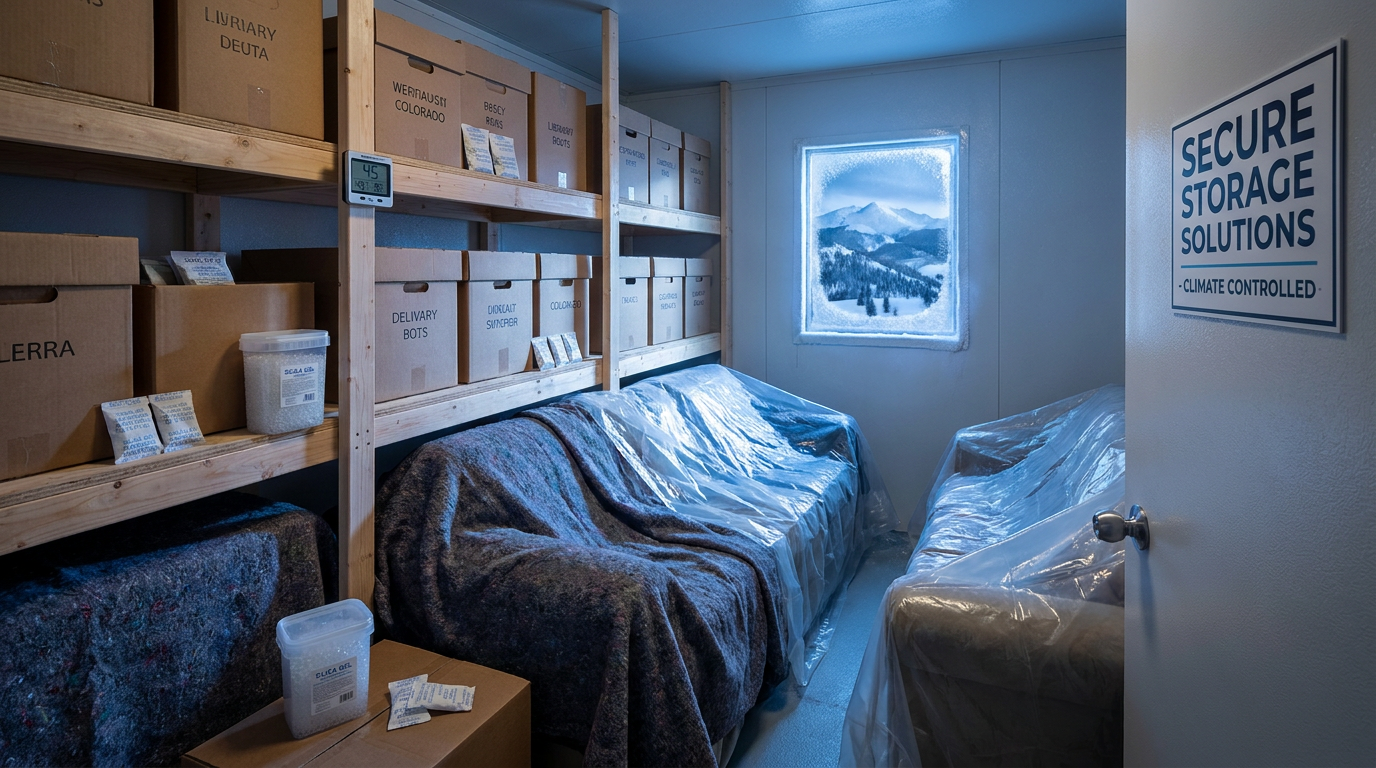
Crested Butte experiences temperature swings from below zero in winter to above 80 degrees Fahrenheit in summer. According to the Storage Facility Climate Control Guidelines published by the Self Storage Association, items sensitive to temperature fluctuations require climate-controlled units maintaining 55 to 80 degrees year-round.
Items requiring climate control include wooden furniture (prevents warping and cracking), electronics (prevents condensation damage), leather goods (prevents drying and cracking), photographs and documents (prevents yellowing and brittleness), and musical instruments (prevents tuning and structural issues).
Our storage protection plans provide additional coverage for valuable items. Climate-controlled interior units at Elk Mountain Storage start at $140 per month for a 10x10 space, offering year-round temperature stability regardless of external conditions.
Common Storage Calculation Mistakes to Avoid
Public Storage reports that these five errors cause the majority of sizing problems. Avoiding them saves both money and the hassle of switching units.
Forgetting garage and outdoor items. Lawn mowers, bicycles, grills, and patio furniture add 50 to 100 square feet to most household calculations. Include these in your room-by-room inventory even though they live outside.
Underestimating box quantities. The American Moving and Storage Association estimates that a typical 3-bedroom home generates 60 to 80 boxes during a move. Each box requires approximately 2 square feet of floor space when stacked 4 high.
Ignoring access requirements. A unit packed floor to ceiling with no aisles makes retrieval nearly impossible. Unless storing items long-term without access, budget space for a center aisle at minimum.
Choosing based on price alone. A $50 monthly savings on a smaller unit costs more when you need to upgrade mid-lease. Most facilities charge move-out fees, new deposits, and higher rates on larger units.
Not accounting for future additions. If you anticipate adding items during your rental period, size up by one unit level. This flexibility costs less than upgrading later.
Frequently Asked Questions About Storage Unit Sizing
What size storage unit do I need for a 1-bedroom apartment?
A 1-bedroom apartment typically fits in a 5x10 to 10x10 storage unit (50 to 100 square feet). The smaller size works if you disassemble furniture and pack efficiently. Choose the 10x10 if keeping furniture assembled or storing additional items like bicycles and seasonal gear.
How many boxes fit in a 10x10 storage unit?
A 10x10 storage unit holds approximately 100 to 150 medium-sized moving boxes when stacked to the 8-foot ceiling. This assumes uniform box sizes and stable stacking. In practice, most people store a mix of furniture and boxes, reducing box capacity to 40 to 60 boxes alongside furniture.
Do I need climate-controlled storage for furniture?
Wooden furniture, leather pieces, and upholstered items benefit from climate control when stored longer than 3 months or in regions with temperature extremes. In Crested Butte, where winter temperatures drop below zero and summer highs exceed 80 degrees, climate control prevents warping, cracking, and mold growth on sensitive furniture.
How do I measure furniture for storage units?
Measure the length, width, and height of each furniture piece in inches, then convert to feet by dividing by 12. Multiply length by width to get the floor footprint in square feet. For items taller than 4 feet, consider whether they can be stored on their side to reduce footprint.
What is the cheapest way to store a king-size bed?
Disassemble the bed frame completely and store the mattress on its side against a wall. This reduces the footprint from 42 square feet to approximately 15 square feet, potentially allowing a smaller, less expensive unit. Wrap the mattress in a protective cover to prevent dust and moisture damage during storage.
Choosing the Right Unit at Elk Mountain Storage
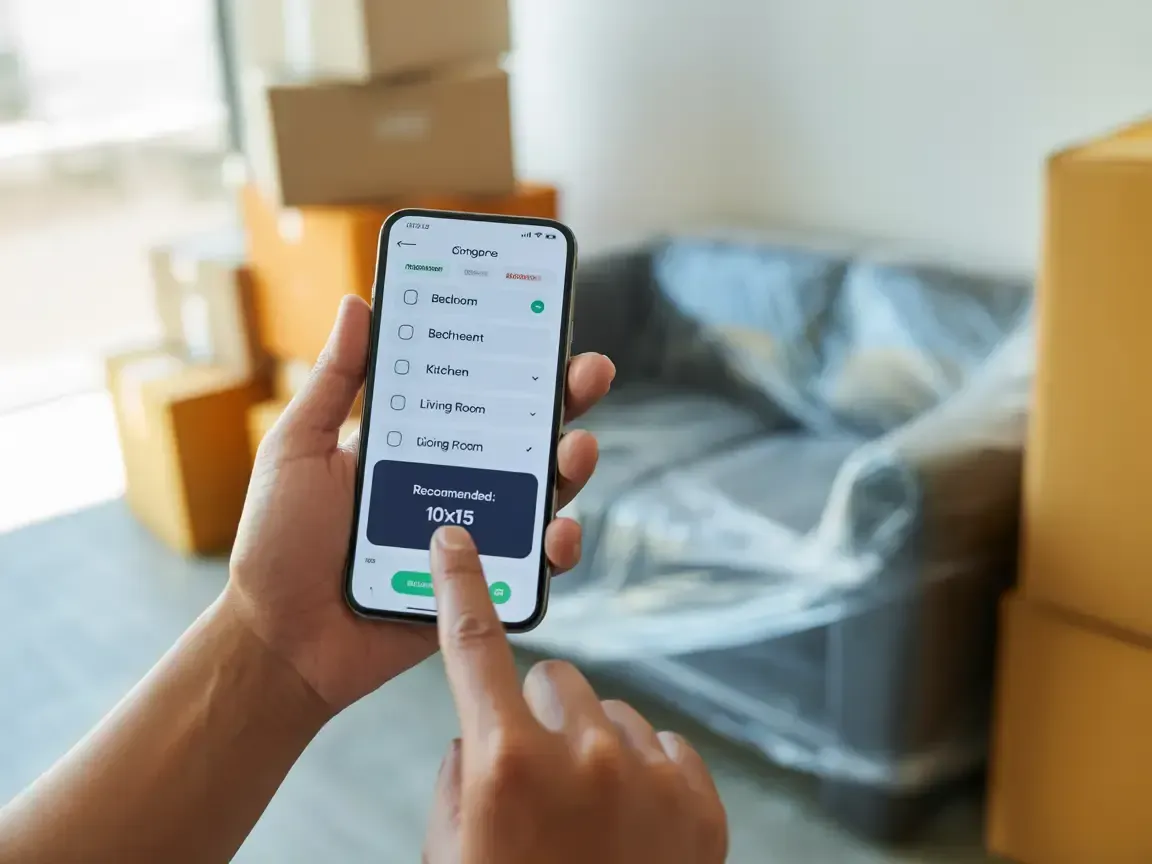
Elk Mountain Storage offers unit sizes ranging from 5x8 interior spaces at $177 per month to 10x30 drive-up units at $561 per month. Our current promotion provides 50 percent off for the first 3 months on select units, making it an ideal time to secure the right size for your needs.
Drive-up units provide ground-floor convenience for loading heavy furniture and frequent access. Interior upstairs units offer climate control for temperature-sensitive belongings at competitive rates. Our locally owned facility provides 24/7 secure access, clean and well-maintained spaces, and no deposit requirements.
For Gunnison Valley residents, seasonal visitors, and local businesses needing flexible storage solutions, the room-by-room calculation method ensures you select the most cost-effective unit size. Contact us at 970.316.4811 or Help@LookingForStorage.com with your calculated square footage, and our team will recommend the best available option.
|