What Size Storage Unit Do I Need? Complete 2026 Size Guide |
| WHAT SIZE STORAGE UNIT DO I NEED
⏱ 12 min read ·
📄 #2,392 words
Find the right storage unit size for your needs. Compare 5x5, 10x10, 10x20 units with room equivalents, what fits inside, and pricing to make the best choice.
|
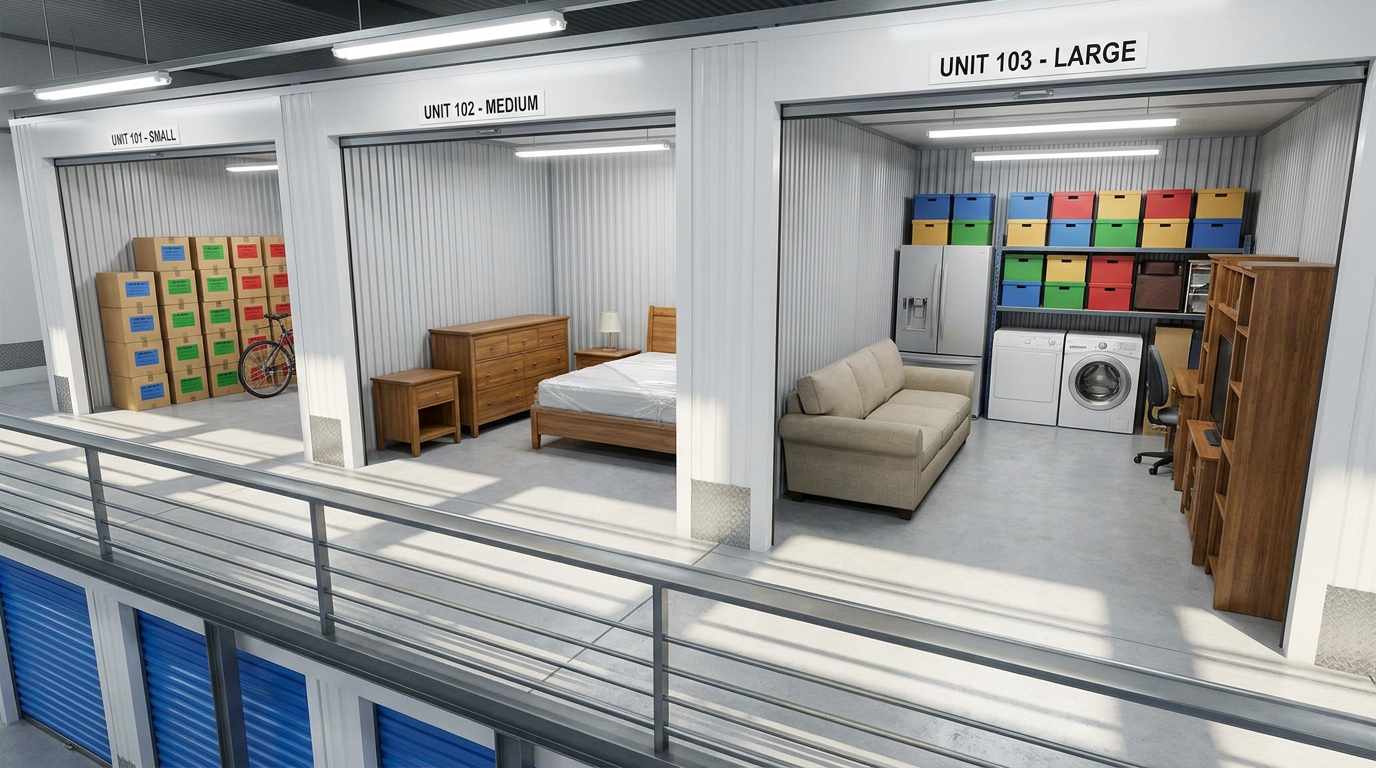
M atch your storage unit size to the number of rooms you are storing: a 5x5 unit fits a closet, a 5x10 holds a studio apartment, a 10x10 accommodates a one-bedroom home, and a 10x20 stores a three-bedroom house. Most units stand 8 feet tall, so stacking boxes and furniture vertically maximizes your usable space.
| Key Points: | |
|---|---|
| • | 5x10 units (50 sq ft) are the most popular size, fitting a studio or one-bedroom apartment |
| • | 10x10 units (100 sq ft) hold contents of a full one-bedroom home including furniture |
| • | 10x20 units (200 sq ft) equal a standard one-car garage, ideal for 3-bedroom homes |
| • | Add one size up if you need aisle space for frequent access to your belongings |
| • | Standard units cost $100-300/month; climate-controlled units add 25-50% more |
Storage Unit Size Chart: Quick Reference Guide
According to the Self Storage Association's industry data, renters frequently underestimate space needs by 20-30%. The chart below shows standard dimensions, square footage, and room equivalents to help you choose accurately.
| Unit Size | Square Feet | Room Equivalent | Typical Monthly Cost |
|---|---|---|---|
| 5x5 | 25 sq ft | Small closet | $50-90 |
| 5x10 | 50 sq ft | Walk-in closet or studio | $75-150 |
| 10x10 | 100 sq ft | 1-bedroom apartment | $100-200 |
| 10x15 | 150 sq ft | 2-bedroom apartment | $150-275 |
| 10x20 | 200 sq ft | 3-bedroom home or 1-car garage | $175-350 |
| 10x30 | 300 sq ft | 4-5 bedroom home | $250-450 |
These costs reflect 2026 national averages. Mountain resort areas like Crested Butte, Colorado, typically run 15-25% higher due to limited real estate and seasonal demand spikes. Check our 2026 self-storage pricing guide for detailed Colorado mountain town comparisons.
How Big Is a 5x5 Storage Unit?
A 5x5 storage unit provides 25 square feet of floor space with 8-foot ceilings, totaling 200 cubic feet of storage volume. Picture a standard hall closet or a half bathroom. This size works best for seasonal items, small collections, or overflow from a single room.
What Fits in a 5x5 Unit
Expect to store 10-15 medium moving boxes, a small dresser, a few suitcases, and seasonal decorations. College students at Western Colorado University often use this size for summer storage of dorm essentials. Seasonal residents store ski boots, helmets, and off-season clothing comfortably in this footprint.
Best uses for 5x5: Holiday decorations, seasonal clothing, small furniture, document boxes, sporting equipment, or college dorm overflow. Our guide on storing holiday decorations by season explains organization techniques that maximize small unit efficiency.
How Big Is a 5x10 Storage Unit?
A 5x10 storage unit measures 50 square feet, roughly the size of a large walk-in closet. With standard 8-foot ceilings, you get 400 cubic feet of total volume. This is the most popular storage unit size nationwide, according to SpareFoot's 2025 industry analysis.
What Fits in a 5x10 Unit
A queen mattress and box spring, a dresser, a small sofa or loveseat, and 15-20 boxes fit comfortably. This size handles studio apartment contents or one full bedroom of furniture plus boxes. Mountain bikers store two to three bikes alongside gear bags and tools without crowding.
Best uses for 5x10: Studio apartment moves, single bedroom furniture, mattress storage, recreational equipment, or small business inventory. Contractors often use this size for power tools and seasonal supplies between projects.

How Big Is a 10x10 Storage Unit?
A 10x10 storage unit provides 100 square feet, equivalent to a small bedroom or half a standard one-car garage. The 800 cubic feet of volume accommodates substantial furniture pieces and dozens of boxes. Industry data shows 10x10 units represent approximately 25% of all rentals nationwide.
What Fits in a 10x10 Unit
Contents of a complete one-bedroom apartment fit here: a full living room set (sofa, coffee table, entertainment center), bedroom furniture (queen bed, dresser, nightstands), and 30-40 moving boxes. You can also store a motorcycle or several bicycles alongside household items.
Best uses for 10x10: One-bedroom apartment moves, home staging furniture, motorcycle storage, small office contents, or seasonal gear rotation. Second-home owners in Crested Butte frequently choose this size for furniture between rental seasons. Use our storage unit size guide to visualize exactly what fits.
How Big Is a 10x15 Storage Unit?
A 10x15 unit offers 150 square feet of floor space, similar to a large bedroom. This size bridges the gap between apartment and house storage needs. The 1,200 cubic feet of volume handles two-bedroom apartment contents with room to spare.
What Fits in a 10x15 Unit
Store a complete two-bedroom apartment: living room furniture, two bedroom sets, a dining table with chairs, and 40-50 boxes. This size also accommodates a small car alongside household items if you pack efficiently against the walls.
Best uses for 10x15: Two-bedroom moves, home renovation storage, vehicle plus belongings, or business inventory requiring regular access. Property managers storing staging furniture between listings find this size ideal.
How Big Is a 10x20 Storage Unit?
A 10x20 storage unit equals 200 square feet, the same footprint as a standard one-car garage. With 1,600 cubic feet of volume, this size handles three-bedroom home contents or a vehicle plus substantial belongings. According to Public Storage's size guide, this ranks as the second most popular unit size after 5x10.
What Fits in a 10x20 Unit
A three-bedroom house fits here: multiple bedroom sets, full living and dining room furniture, appliances (washer, dryer, refrigerator), and 60+ boxes. You can store a full-size sedan or small SUV with room for boxes along the sides.
Best uses for 10x20: Three-bedroom home moves, vehicle storage with household items, business inventory, construction equipment, or estate storage during probate. Explore business storage solutions designed for contractors and retailers needing this capacity.
How Big Is a 10x30 Storage Unit?
A 10x30 unit provides 300 square feet, comparable to a large one-car garage or small two-car garage. The 2,400 cubic feet of volume handles four to five bedroom homes or commercial inventory. This size also accommodates boats up to 25 feet, RVs, and large trailers.
What Fits in a 10x30 Unit
Complete contents of a four or five bedroom house fit comfortably: all furniture, appliances, boxes, and outdoor equipment. Business owners store commercial inventory, restaurant equipment, or multiple vehicles. RV owners in mountain communities use this size for winter storage of Class B motorhomes.
Best uses for 10x30: Large home moves, RV and boat storage, commercial inventory, estate liquidation staging, or multi-vehicle storage. Facilities like Elk Mountain Storage offer units up to 19x35 feet for oversized vehicles and equipment.
Can You Fit a Queen Mattress in a 5x5 Storage Unit?
Yes, a queen mattress fits in a 5x5 unit when stored on its side against the wall. Queen mattresses measure 60 inches wide by 80 inches long (5 feet by 6.7 feet). Standing the mattress vertically leaves approximately 3 feet of floor space for boxes and small items.
However, storing a queen mattress with a box spring requires more planning. Together they measure about 18 inches thick. Store both on their sides, and you use roughly 3 feet of your 5-foot width. A 5x10 unit provides more practical space if storing a complete bed set with other furniture.
Pro tip: Use a mattress bag to protect against dust and moisture. Avoid laying mattresses flat with items stacked on top, which causes permanent indentations and structural damage over time.
How Many Bedrooms Fit in a 10x10 Storage Unit?
A 10x10 storage unit holds the complete contents of one bedroom plus a living room, or approximately the furnishings from a one-bedroom apartment. If storing only bedroom furniture (bed, dresser, nightstands, and boxes), two full bedrooms fit when packed efficiently.
The key variable is furniture size and packing skill. Disassembling bed frames, removing table legs, and using uniform box sizes increases capacity by 20-30%. Professional movers from companies like U-Haul and PODS estimate that efficient packing adds the equivalent of 15-20 square feet of usable space.
What Does a 50 Square Foot Storage Unit Look Like?
A 50 square foot storage unit (typically 5x10) looks like a large walk-in closet or a small bathroom. Stand in your bathroom doorway and imagine that depth extending 10 feet. The space feels narrow but surprisingly deep.
Visual comparisons help: 50 square feet equals half a standard parking space, a queen-size bed plus 2 feet on each side, or the cargo area of a large SUV like a Chevrolet Suburban. When viewing units in person, bring a tape measure and mark dimensions on the floor with painter's tape to visualize your belongings.
Three Questions to Ask Before Choosing Your Unit Size
1. How Often Will You Access Your Belongings?
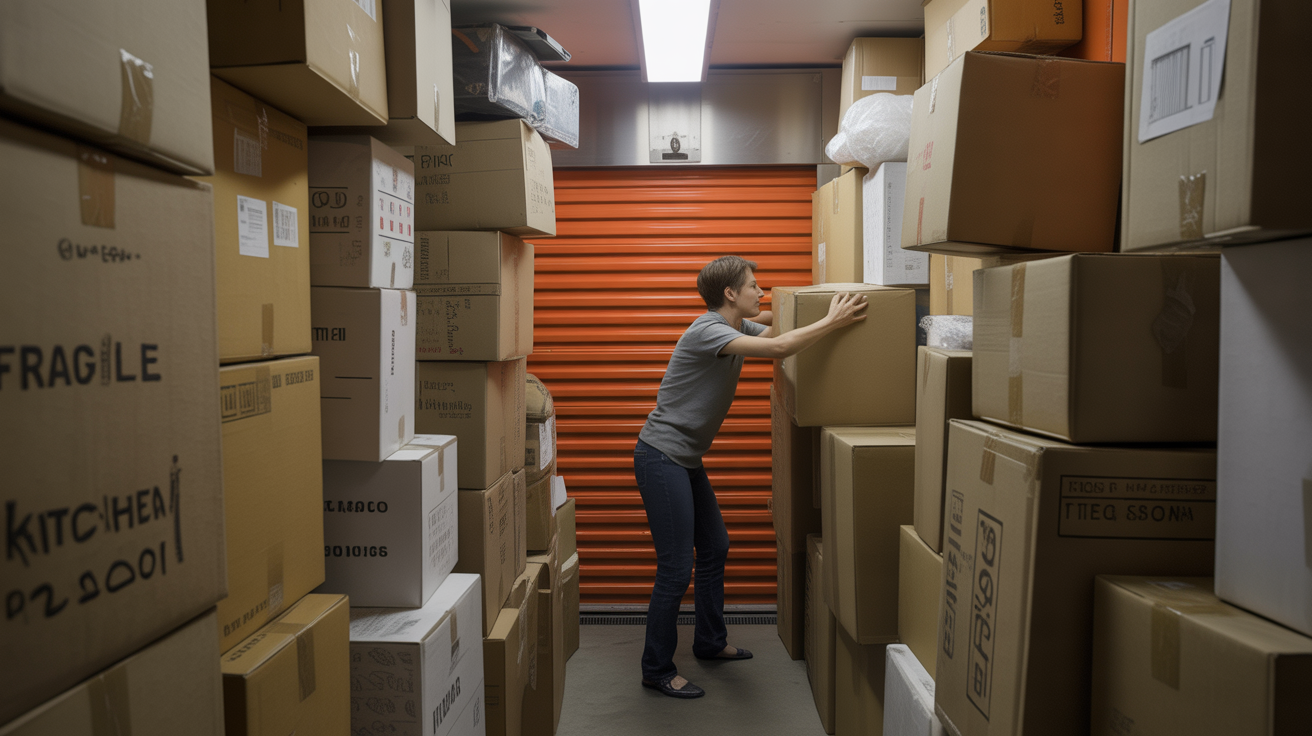
Frequent access requires aisle space. If you visit monthly to retrieve seasonal items, size up by one category. A 5x10 becomes a 10x10 to create a walking path. Infrequent access (annual or move-out only) allows tighter packing and smaller units.
2. Are You Storing Climate-Sensitive Items?
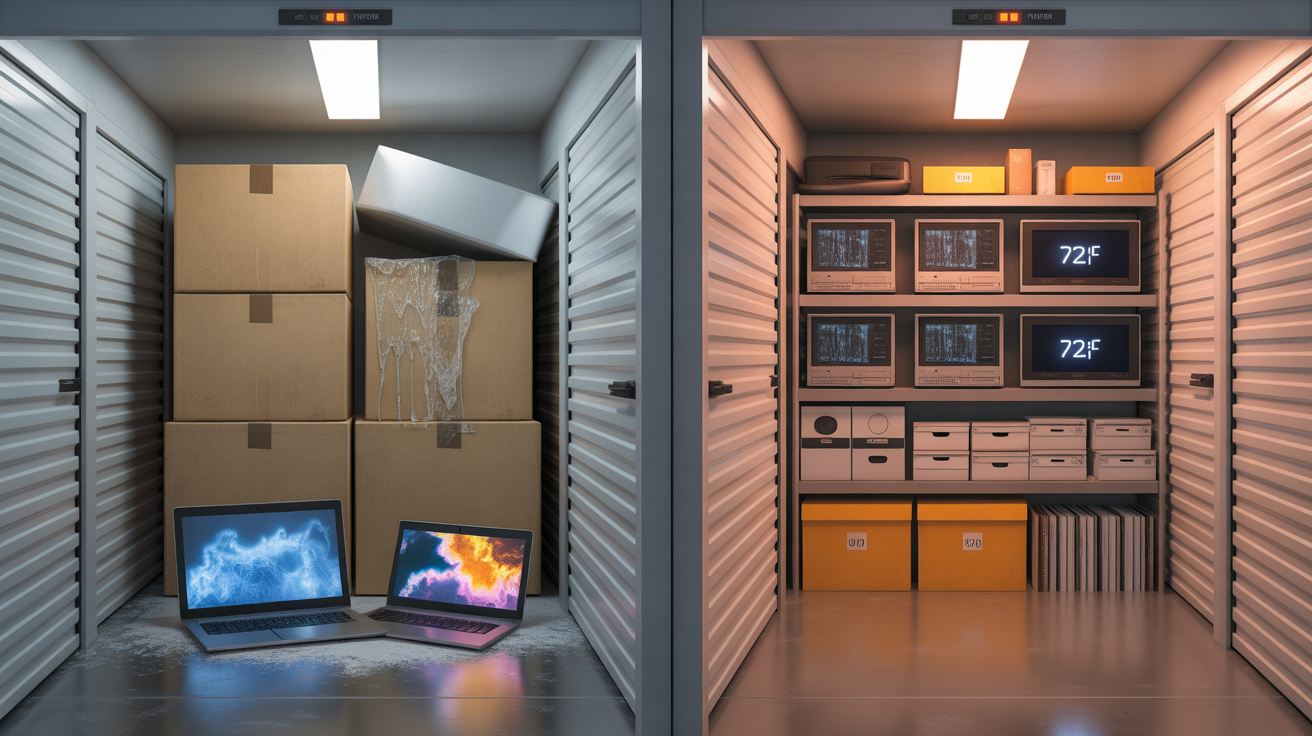
Electronics, wooden furniture, photographs, leather goods, and musical instruments need climate-controlled storage when temperatures exceed 90 degrees F or drop below 32 degrees F. Mountain communities like Crested Butte experience temperature swings from -20 degrees F to 85 degrees F annually. Review our storage insurance guide to understand coverage for temperature-sensitive items.
3. How Long Will You Store?
Short-term storage (under 3 months) justifies tighter packing since you will unpack soon. Long-term storage (6+ months) benefits from organization systems, shelving, and easier access. The longer your storage duration, the more valuable that extra space becomes.
Drive-Up vs. Interior Storage: Which Do You Need?
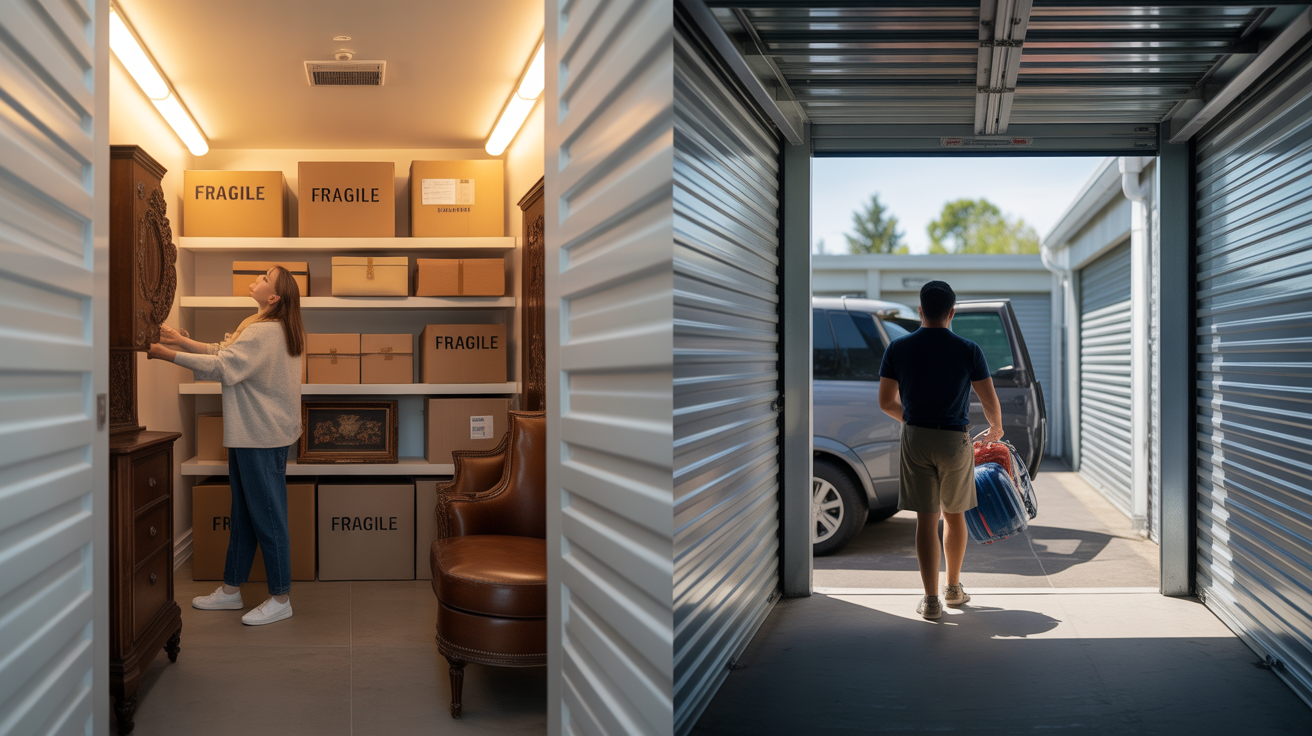
Drive-up units allow vehicle access directly to your unit door, ideal for heavy furniture, appliances, and frequent loading. Interior units require carrying items through hallways but often provide better climate control and security. The choice affects which size works for your situation.
| Feature | Drive-Up Units | Interior Units |
|---|---|---|
| Best for | Heavy items, vehicles, frequent access | Climate-sensitive items, long-term storage |
| Loading ease | Pull vehicle directly to door | Carry items through hallways |
| Climate control | Rarely available | Often available |
| Weather exposure | Loading in rain/snow | Protected loading area |
| Typical cost | $100-350/month (10x10) | $125-400/month (10x10) |
Elk Mountain Storage offers both drive-up and interior options with 24/7 access, LED lighting, and snow removal for year-round accessibility in Colorado's mountain climate.
Storage Unit Sizes for Vehicles, RVs, and Boats
Vehicle storage requires specific dimensions beyond standard room-equivalent sizing. Measure your vehicle's length, width, and height before selecting a unit. Add 2-3 feet to each dimension for door clearance and walking space.
Vehicle Storage Size Requirements
Compact cars
(Honda Civic, Toyota Corolla): 10x15 minimum, 10x20 recommended
Mid-size sedans
(Toyota Camry, Honda Accord): 10x20 minimum
Full-size trucks
(Ford F-150, Chevrolet Silverado): 10x25 minimum, 10x30 recommended
SUVs
(Chevrolet Tahoe, Ford Expedition): 10x25 minimum
Boats
(18-22 feet): 10x25 minimum with trailer
RVs
(Class C, 25-30 feet): 12x30 or larger
Large RVs
(Class A, 35+ feet): 15x40 or open parking
Mountain communities see high demand for RV and boat storage during winter months. Facilities offering covered or enclosed vehicle storage protect against snow load, UV damage, and wildlife intrusion. Elk Mountain Storage provides vehicle storage units up to 19x35 feet with drive-up access in downtown Crested Butte.
How to Estimate Your Storage Needs in 4 Steps
Step 1: Inventory Large Items First
List furniture pieces by room: beds, sofas, tables, dressers, and appliances. These items determine your minimum size requirement. A king bed, sectional sofa, and dining table eliminate 5x10 as an option regardless of box count.
Step 2: Count Your Boxes
Estimate box quantities using this formula: 10-15 boxes per room for typical households. A three-bedroom home generates 30-45 boxes. Add 20% for items you forgot or underestimated. Standard moving boxes (18x18x16 inches) stack efficiently to ceiling height.
Step 3: Add Access Space If Needed
If accessing items monthly or more frequently, add 15-20% to your calculated space for a walking aisle. This typically means upgrading one size category. Infrequent access allows wall-to-wall packing.
Step 4: Consider Seasonal Variations
Mountain residents often store different items seasonally: skis and winter gear in summer, bikes and patio furniture in winter. Plan for your maximum storage load, not current needs. A unit that fits summer items may overflow when adding holiday decorations in November.
Money-Saving Tips for Choosing the Right Size
Renting the correct size saves $20-100 monthly compared to oversizing. However, undersizing forces upgrade fees, double moves, and potential damage from overcrowding. Use these strategies to optimize your choice.
Disassemble furniture: Removing bed frames, table legs, and shelving units reduces volume by 30-40%. Keep hardware in labeled bags taped to furniture pieces.
Use uniform boxes: Same-size boxes stack efficiently without wasted space. Avoid mixing small, medium, and large boxes randomly.
Donate or sell first: Storage costs accumulate. Items worth less than 6 months of storage fees should be sold or donated instead.
Ask about promotions: Many facilities offer first-month discounts of 50% or more. Elk Mountain Storage provides 50% off the first month for online rentals.
Frequently Asked Questions
How do I figure out what size storage unit I need?
Count your rooms and match to standard sizes: closet overflow needs 5x5, studio apartment needs 5x10, one-bedroom needs 10x10, two-bedroom needs 10x15, and three-bedroom needs 10x20. Add one size category if you need walking space for frequent access.
What is the most common storage unit size?
The 5x10 unit (50 square feet) is the most popular size nationwide, followed by 10x10. These sizes handle the most common use cases: apartment moves, seasonal storage, and furniture between homes.
Is it better to get a bigger storage unit?
Size up if you access items frequently, plan to add belongings later, or value organization over cost savings. Stay smaller if storing long-term with infrequent access, packing efficiently, or budget is the priority.
How much does a 10x10 storage unit cost per month?
A 10x10 storage unit costs $100-200 monthly at standard facilities and $125-275 for climate-controlled units. Mountain resort areas and major cities run 20-40% higher than national averages. Review storage FAQ for specific pricing in your area.
Should I get climate-controlled storage?
Choose climate control for electronics, wooden furniture, leather, photographs, wine, musical instruments, or any items stored longer than 6 months in areas with temperature extremes. Standard units work fine for metal items, plastic containers, outdoor equipment, and short-term storage.
|